The NHL was really struggling in the early 2000s. The 1990s presented what is now known as the “Dead Puck Era,” where goals were few and far between, and games were close, tight, and defensive. For a league trying to gain popularity in the United States, especially in the South, a lack of scoring was not going to cut it.
Then came two scoring superstars: Alexander Ovechkin in 2004 and Sidney Crosby in 2005. Back-to-back generational players, they would become divisional rivals for 21 years and counting, with Ovechkin’s recent one-year extension adding another chapter to one of the NHL’s most beloved rivalries. In a similar way, prior to the return of the 4 Nations Face-Off and the Olympics, the NHL had fallen into a stagnant rotation of players, coaches, and champions. While great players continued to come and go, the excitement surrounding the Ovechkin-Crosby rivalry had naturally lost some of the momentum it once had. The NHL went 11 years without best-on-best international competition, and had it not returned in recent years, coupled with the arrival of this expansion team, the league would be in a very different place than it is today.
A New Rival Is in Town
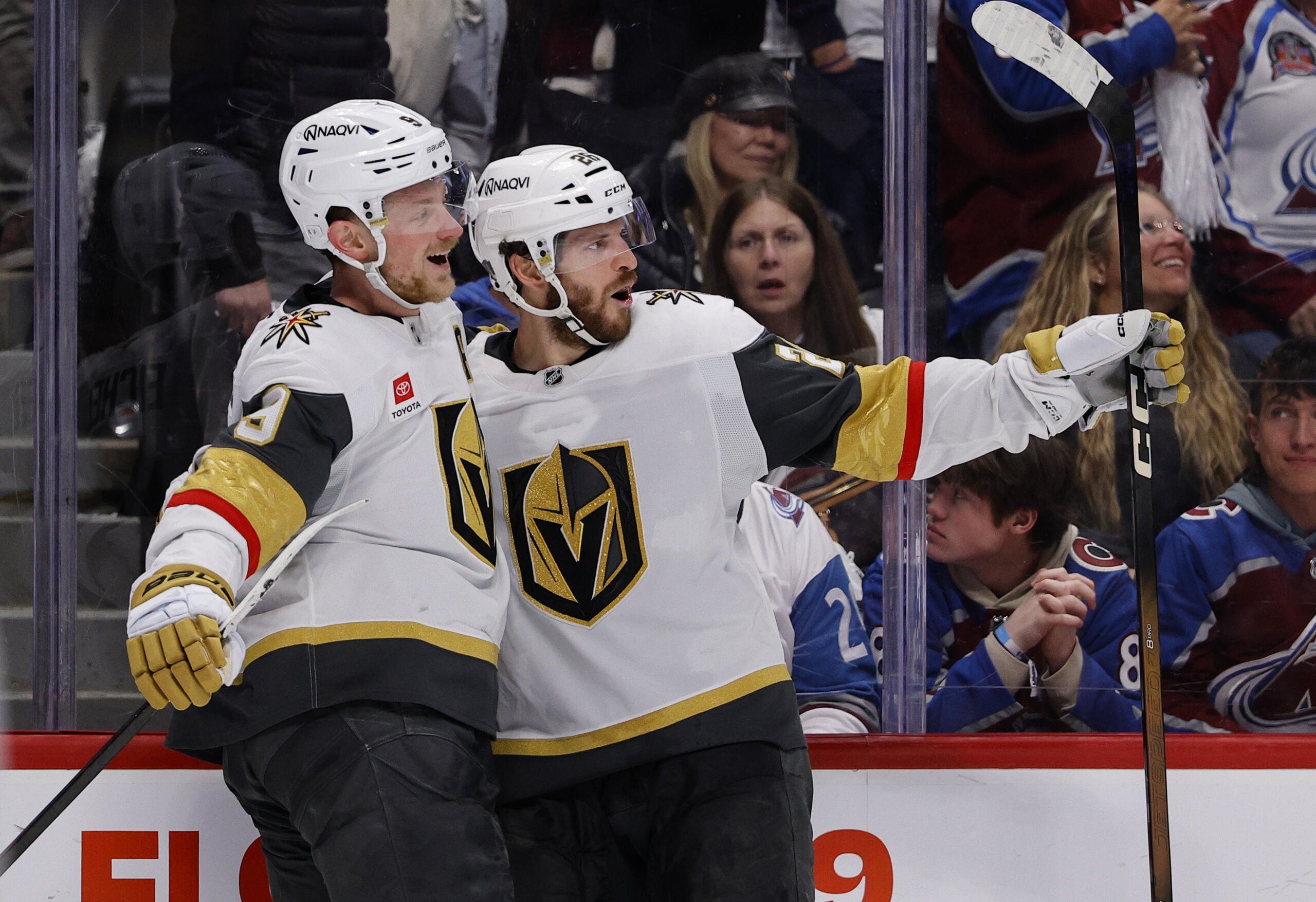
The Vegas Golden Knights joined the National Hockey League in 2017. In a league where every team seemed to be copying everyone else, Vegas had a different idea: do something different. The organization did extensive research and uncovered several diamonds in the rough, including William Karlsson, Jonathan Marchessault, Reilly Smith, Brayden McNabb, and Shea Theodore.
For William Karlsson, he had spent five years in the league and had never surpassed double digits in goals. In his first season with Vegas, he exploded for 43 goals, a total that many solid second-line players never reach in their entire careers. Jonathan Marchessault, coming off his first 30-goal season, added another 27 goals while more than doubling his assist total from 21 to 48, improving by 24 points in his first season as an inaugural Golden Knight. Reilly Smith increased his production from 37 to 60 points, nearly doubling his previous total. Brayden McNabb didn’t contribute much more offensively, but he established himself as a reliable shutdown defenseman, while Shea Theodore broke out by adding more than 20 points to his previous season’s total before eventually developing into a 50-plus-point defenseman. The immediate success of these players helped carry the inaugural Golden Knights all the way to the Stanley Cup Final in their very first season, instantly making them enemies around the league.
This run of success showed how elite scouting and a willingness to think differently could pay off. Seattle’s difficult start a few years later only highlighted how incredibly hard it is for an expansion team to enjoy that level of immediate success. Vegas would go on to reach three Stanley Cup Finals, including this past season when they came up just short, and their organizational continuity is something to admire. The roster has constantly evolved, with the organization making ruthless decisions and showing little concern for sentimentality. They moved on from Marc-André Fleury and several other key members of the inaugural team to acquire players they believed would improve the roster, continuing that aggressive philosophy year after year. Most famously, Mark Stone was placed on long-term injured reserve with an injury that just happened to heal in time for Game 1 of the 2023 playoffs, allowing Vegas to acquire Ivan Barbashev, who became an important contributor to their Stanley Cup-winning team.
This frustrated many opposing fan bases, leading some fans to create Mark Stone “67” jerseys with “LTIR” on the nameplate. Even Stone’s wife posed for a photo with fans wearing those jerseys. Vegas had officially become the villain. Whether you liked them or not, you were going to pay attention to what they did next.
The Golden Knights also sparked a new wave of NHL fandom in a market that many believed would never succeed. Ultimately, they have become a franchise where new fans can quickly learn the rules, embrace the team’s relatively short history, and genuinely feel like they’ve been part of the journey since the beginning. Whether that success continues or not, there’s little doubt that adding Vegas to the league brought back a spark that the NHL had been missing for at least 3 to 4 years.
Check out the latest articles from EasySportz
Check out the latest FIFA World Cup scores