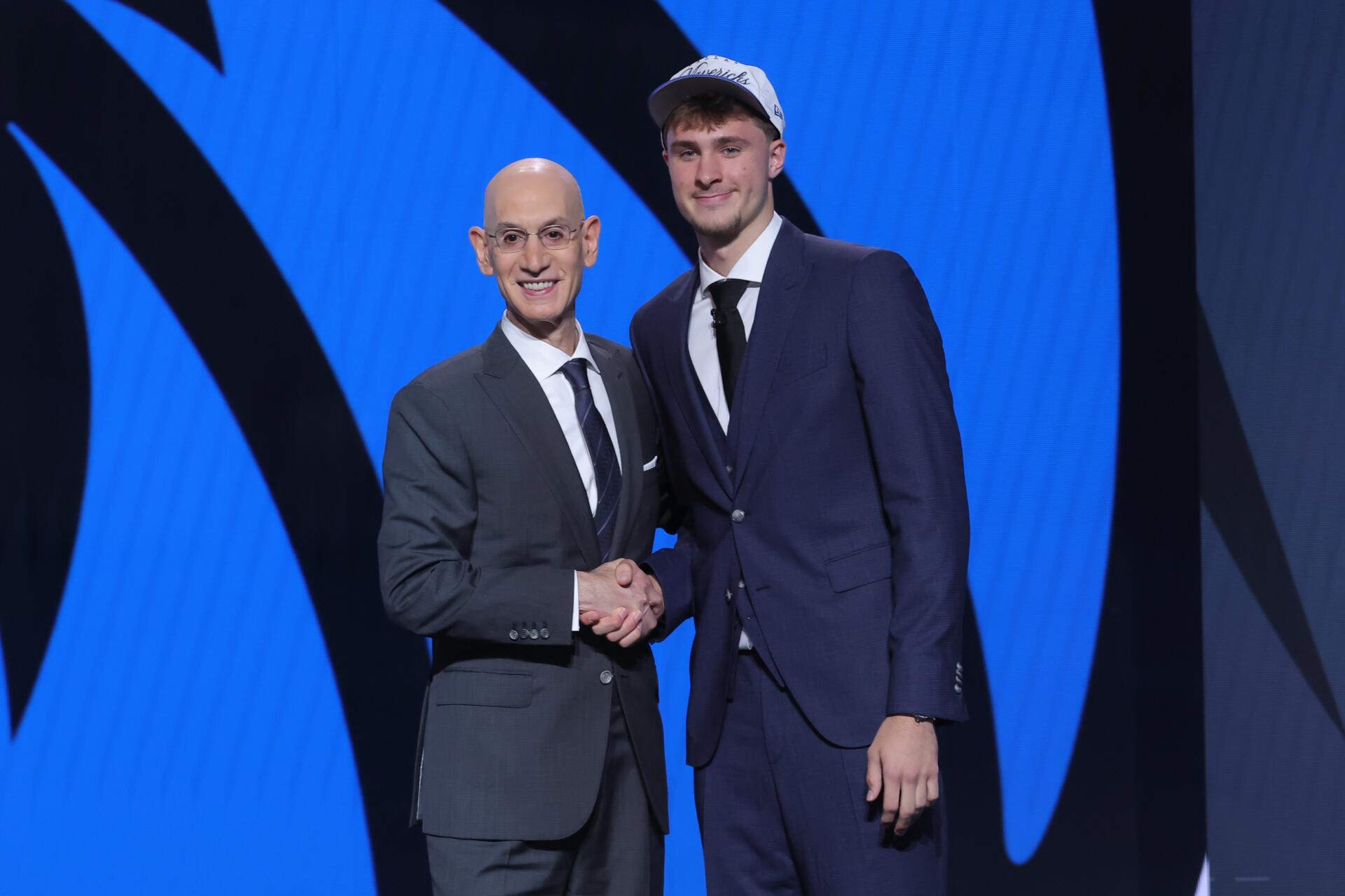
Adam Silver took over as NBA commissioner in 2014, succeeding David Stern after a 30-year run.
Since then, the league has delivered the highs of the Cavs-Warriors superteam era and a shift toward parity. No team has repeated as champion since, with a new winner every season dating back to 2019.
Sounds good, right? Not exactly.
The regular season has become such a grind that Silver introduced a midseason tournament — the NBA Cup — in 2024 to try to hold fan interest. And still, the 82-game schedule feels like it carries little weight for the average fan.
Under Silver, the league has also leaned heavily into gambling. Parlays and daily fantasy contests have become a primary draw just to get through the regular season. The saturation is hard to ignore, especially as players are increasingly investigated for point-shaving concerns or pulled late in games when prop bets come into play.
Then there’s the postseason structure.
After 82 games, 20 of 30 teams still have a path to a title through the play-in and playoffs. Once the play-in narrows the field, the league rolls out four rounds of seven-game series.
By the time a champion is crowned, it’s nearly July — even though most fans had a clear sense of the contenders by March.
And that’s part of the issue.
Hardcore basketball fans are often locked into conference tournaments and March Madness by the final stretch of the NBA regular season. Casual fans check in during the early rounds of the NCAA tournament, and by the time that ends, attention shifts again.
All of it leaves the NBA in a difficult spot.
There are signs of adjustment — the return of NBA Finals branding on the court is one — but the broader concerns remain. Tanking is still a problem. Proposed fixes haven’t fully addressed it. And skepticism around draft lotteries and market favoritism continues to linger.
At the end of the day, there’s a growing disconnect. Fans are questioning not just the structure, but the authenticity of the product.
And that’s a much bigger issue than any single rule change.
Check out all EasySportz NHL Content Here
College Football Viewing Guide