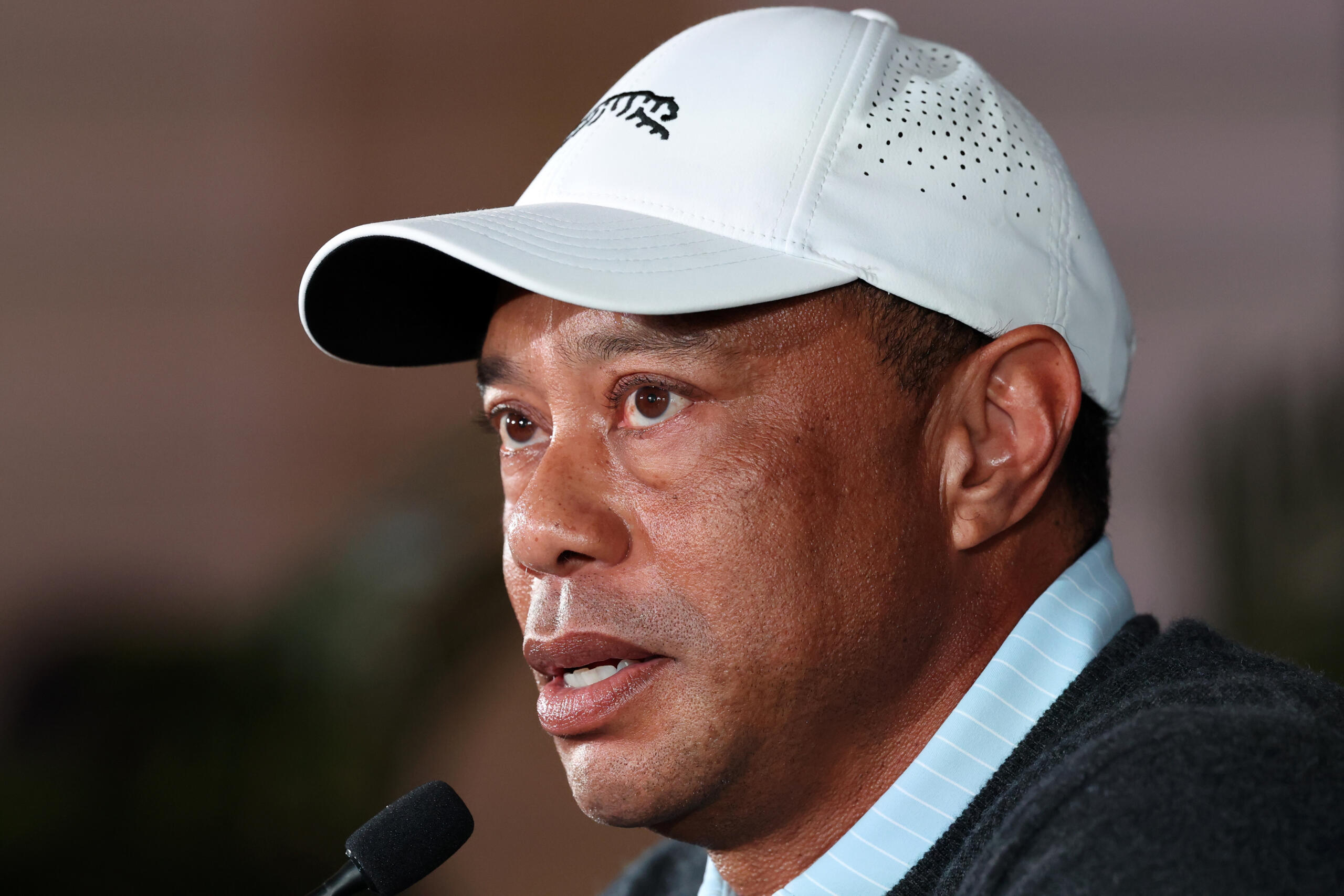
Where the Hell Is Tiger Woods? The Game’s Biggest Star Is Still Off the Radar
There was a time when Tiger Woods was the center of every golf conversation.
Now, heading out of The Masters, he’s not even in the conversation — and that silence is louder than anything happening at Augusta National.
Woods missed the 2026 Masters entirely and has not competed in a PGA Tour event in nearly two years, continuing a stretch defined by injuries, surgeries and an increasingly complicated personal situation. According to multiple reports, he has stepped away from competition to focus on his health and is currently receiving treatment overseas in Switzerland, part of a broader rehabilitation plan following recent legal and medical developments.
That absence is not short-term noise. It is part of a longer, unresolved timeline.
Woods has battled through a staggering list of physical setbacks in recent years — multiple back surgeries, leg reconstruction work following his 2021 car crash, and ongoing complications that have limited both his mobility and his ability to practice at a high level. Even when he has reappeared in limited formats, such as simulator golf or exhibition events like TGL, it has been more symbolic than competitive.
He last played meaningful competitive golf in 2024, and even then, it was clear the body was no longer responding like it once did.
Now, the focus has shifted entirely away from returns and toward recovery.
After a recent arrest and a formal decision to step away from golf to seek treatment, Woods’ camp has made it clear that there is no immediate timetable for a comeback. That uncertainty has only fueled speculation — not about whether he can return, but whether he will return in any meaningful competitive form again.
The most consistent rumor circulating in golf circles is that Woods has been undergoing rehabilitation in Switzerland, a setting often associated with private, intensive recovery programs away from the public spotlight. While not officially detailed in depth by his team, multiple reports have linked his treatment plan to overseas care and extended time away from the United States.
What is known is simple: he is not currently playing, not currently practicing for competition, and not currently committed to a return date.
That alone marks a stunning shift for a player who once dictated the sport’s calendar.
Woods’ absence from Augusta was especially notable not just because of his history there — five green jackets, countless iconic moments — but because even symbolic appearances were absent. No ceremonial participation. No competitive attempt. No public schedule tied to PGA Tour events.
Just distance.
The PGA Tour, meanwhile, moves forward without him — faster than ever, with younger stars filling leaderboards and majors no longer defined by his presence. The sport he once anchored has evolved into something more distributed, less centered on a single figure.
Still, the question lingers every time a major begins:
Is this the week he comes back?
Right now, the answer remains the same.
No one knows.
He may return this season. That possibility is still technically on the table. But there is no date, no schedule, and no indication of when — or even if — competitive golf will once again include Tiger Woods in a meaningful way.
For now, the silence continues.
And in golf, that silence still echoes louder than almost anything else.
Check out all EasySportz NHL Content Here
College Football Viewing Guide