TALLADEGA, Ala. — It’s hard to live in the South and not recognize the name Talladega Superspeedway. Known for high speeds and unpredictable finishes, the track has been a staple of NASCAR since it opened in 1969. But beyond the racing, Talladega carries a reputation shaped as much by legend as by history.
Long before the speedway opened in 1969, the region carried a story that has been passed down through generations. According to local folklore, the land — once part of Native American territory — became cursed during the forced relocation of tribes following the Indian Removal Act.
The story goes that in 1838, as a group passed through what was then known as “Talatigi,” a medicine man placed a curse on the valley. Some versions claim it was in response to the suffering of his people, declaring that the land would forever be marked by misfortune. There is no historical evidence confirming this event, but the legend has endured — especially as Talladega’s reputation grew.
104 years later When Bill France Sr. chose the site for NASCAR’s fastest track, the land had previously been used as a military airfield during World War II. Construction moved quickly, but even the track’s first race weekend was surrounded by controversy. Tire failures during practice led many top drivers to boycott the inaugural event, leaving a reduced field. Richard Brickhouse was ultimately declared the winner, though the finish itself was disputed.
As the years went on, the legend of Talladega only grew.
In 1973, Bobby Isaac famously exited his car while leading a race, later saying he heard voices telling him to get out. Other incidents, including violent crashes and career-altering injuries, added to the track’s mystique. The death of Davey Allison in 1993 — though not occurring during a race — further deepened the association between Talladega and tragedy in the minds of many fans.
On track, danger has always been part of the equation. In 1987, Bobby Allison’s airborne crash into the catch fence led to the introduction of restrictor plates, fundamentally changing how races at superspeedways are run. The result was tighter packs, higher intensity, and an increased likelihood of multi-car wrecks.
Yet Talladega is not defined by tragedy alone.
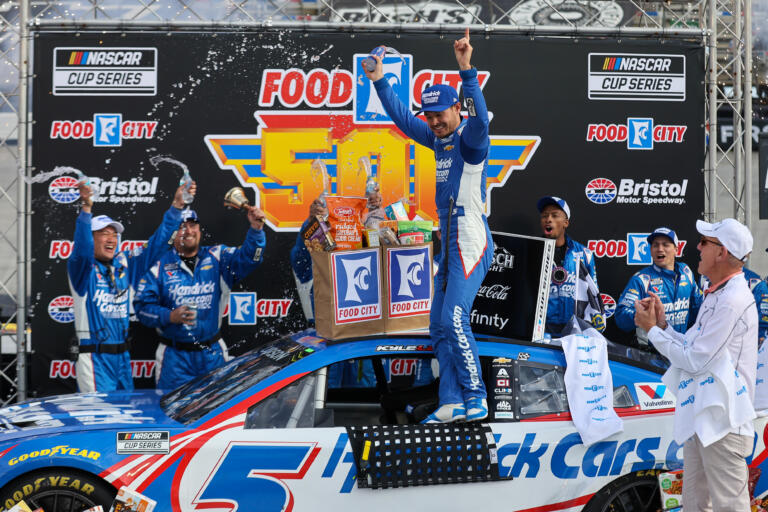
The same unpredictability has created some of NASCAR’s most memorable moments. Underdogs and first-time winners often find success here, with drivers like Brad Keselowski and Ricky Stenhouse Jr. building defining moments at the track. Every race carries the sense that anything can happen — and usually does.
Today, whether the idea of a curse is taken seriously or simply seen as part of Talladega’s lore, it remains woven into the identity of the track. The stories persist because the racing continues to defy expectation.
At Talladega, the line between myth and reality has always been thin — and that may be exactly what keeps fans coming back.