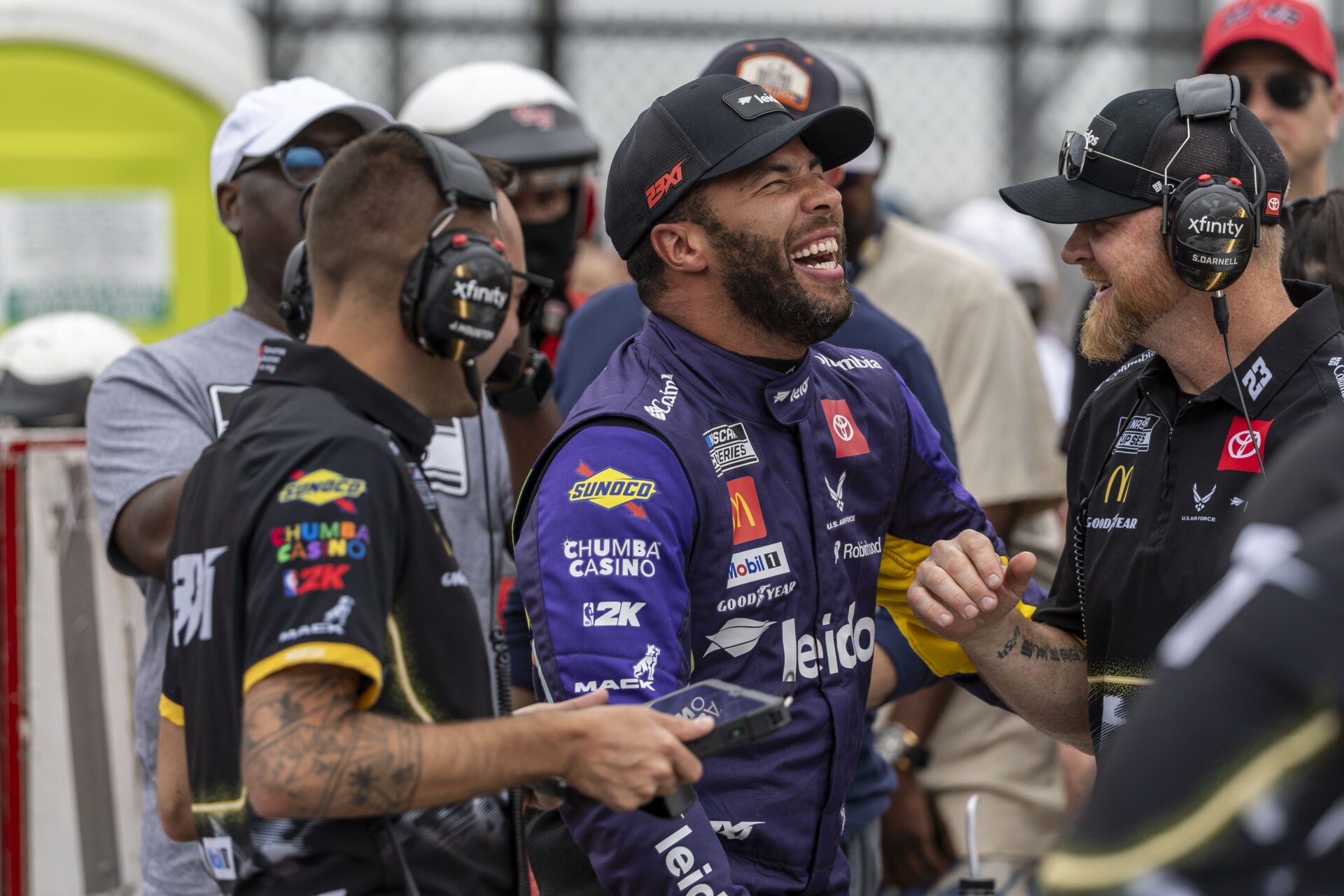
TALLADEGA, Ala. — Sunday had all the signs of being Bubba Wallace’s day.
From the opening stages at Talladega Superspeedway, Wallace showed the speed, control and awareness that have made him one of the most reliable superspeedway contenders in the NASCAR Cup Series. He ran near the front, managed the draft effectively and positioned himself as a factor when it mattered most.
The race unfolded in a way that suited his strengths.
Driving for 23XI Racing, Wallace stayed out of trouble through the early chaos and maintained track position as the field settled into long green-flag runs. He worked with drafting partners, timed his moves with precision and avoided the kind of mistakes that often derail strong superspeedway efforts.
By the final stage, he looked like a legitimate contender.
Wallace remained in the lead pack, with a car capable of making decisive moves in the closing laps. His experience at Talladega showed in the way he read the shifting lanes and anticipated runs. As the race tightened, he appeared well-positioned to contend for the win.
Then, the race changed.
A multi-car crash — the kind that has defined Talladega races for decades — swept through the field and ended Wallace’s afternoon. In a matter of seconds, a promising performance turned into another superspeedway setback.
It was a reminder of the margin for error at tracks like Talladega. Even when a driver executes nearly every aspect of the race correctly, the outcome can hinge on a single moment outside of their control.
For Wallace, the disappointment was clear.
The speed was there. The strategy held. The opportunity existed.
But the result did not follow.
Despite the finish, the performance reinforced Wallace’s standing as a consistent threat on superspeedways. He continues to put himself in position to win at tracks where positioning and timing are critical — even if the final results don’t always reflect it.
Sunday was shaping up to be his day.
At Talladega, that distinction can disappear just as quickly as it arrives.
Check out all EasySportz NHL Content Here
College Football Viewing Guide