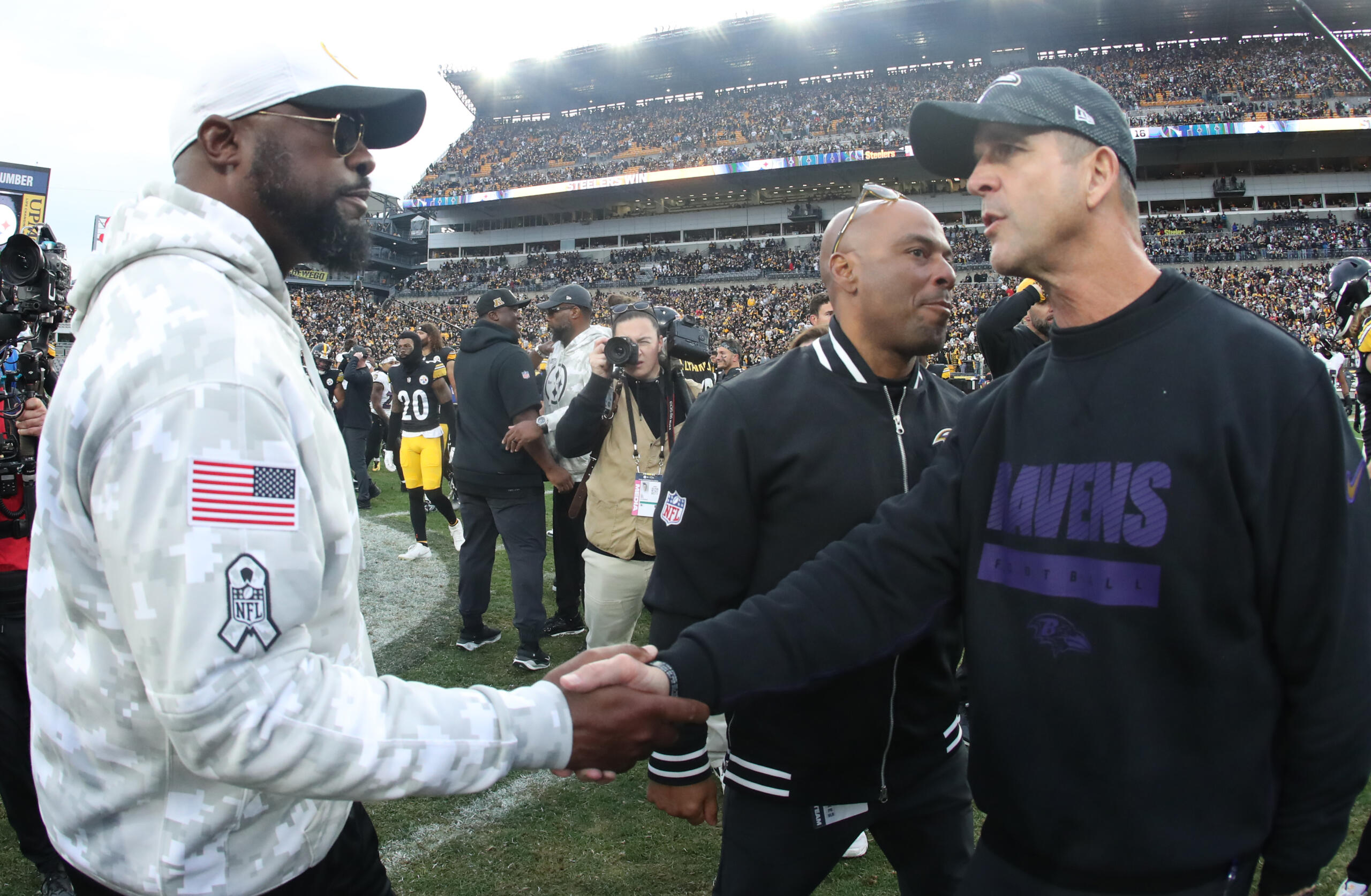
PITTSBURGH, Pa.
There are games that decide seasons, games that decide legacies, and games that quietly ask franchises the most uncomfortable question in sports: Is this really still working?
Sunday’s winner-take-all AFC North showdown between the Pittsburgh Steelers (9-7) and Baltimore Ravens (8-8) qualifies on all three counts. One team will advance to the playoffs. The other will go home. And the loser — not the winner — should also go to the owner’s office and start packing up the whiteboard.
Yes, that sounds extreme. It’s also overdue.
This division used to be the NFL’s gold standard: brutal, modern, adaptive. Now it’s a museum exhibit powered by reputation and inertia. The Steelers won the first meeting in Baltimore. The Ravens stayed alive by beating Green Bay in Week 17. Cleveland upset Pittsburgh to force this final-week reckoning. The drama is real. The urgency is real.
The progress is not.
Both Mike Tomlin and John Harbaugh are excellent coaches — historically. Both own Super Bowl rings. Both stabilized their franchises for over a decade. And both, in the current version of the NFL, are being quietly outpaced by younger, more aggressive, more flexible coaching minds.
That doesn’t make them bad coaches. It makes them expensive comfort blankets.
Pittsburgh’s résumé under Tomlin remains remarkably consistent and the floor is just as high as it’s ever been, but it’s really getting old. No losing seasons. Competitive every year. Division relevance baked in. But consistency has replaced contention. The Steelers have made the playoffs repeatedly in recent seasons only to exit early, often predictably, with an offense that looks outdated by halftime.
This season has followed the script. At 9-7, Pittsburgh still controls its fate, but the margins are thin. The Browns beat them when it mattered most. The offense has struggled to generate explosive plays. The team relies on defense, field position and hope — the same formula that has produced respectability, not banners.
Baltimore’s story isn’t much different, just messier.
At 8-8, the Ravens remain alive because the AFC North has cannibalized itself. Harbaugh’s teams are always physical, always disciplined, always competitive — and increasingly stagnant. The Ravens beat Green Bay in Week 17, a needed win that showcased resilience. It also highlighted the ceiling: survive, advance, and hope the matchup gods show mercy.
That’s not a championship plan. That’s a survival strategy.
The NFL has changed. Offenses evolve weekly. Coaching trees sprout overnight. Analytics shape decisions that used to be ruled by instinct and gut feel. The teams consistently competing for Super Bowls are aggressive on fourth down, flexible with personnel and ruthless about updating systems.
Pittsburgh and Baltimore have largely chosen continuity instead.
It’s admirable. It’s loyal. It’s also limiting.
Look around the league. Coaches with fewer years, fewer rings and fewer emotional attachments are winning because they adapt faster. They tailor systems to players, not history. They don’t treat “the standard” as sacred text.
The AFC North has become a paradox. It’s still physical. Still proud. Still loud. But it’s also broken enough that 10-7 might win the division, and that alone should prompt self-reflection.
This is not a call to fire legends recklessly. It’s a call to acknowledge timing.
If Pittsburgh wins, Tomlin will stay. He should. Division titles buy patience. If Baltimore wins, Harbaugh will stay. He’s earned that leash. The league works this way.
But the loser of Sunday’s game should not hide behind résumés.
Because the evidence is there. Seasons that plateau. Playoff appearances without advancement. Schemes that look a beat slow. Decisions that feel safe instead of sharp. Fan bases that know exactly how the story ends.
Great coaches aren’t fired because they fail. They’re fired because the game moves on.
The Steelers and Ravens once defined where the NFL was going. Now they’re fighting over where it’s been.
The winner Sunday gets January football. The loser gets clarity — if they’re willing to accept it.
And if either franchise truly wants to compete for championships again, the bravest move might not be winning this game.
It might be admitting that the voice that built everything isn’t the one that finishes what comes next.
Check Out All EasySportz NFL Content Here!
Jaguars Season Preview, A Look Back!