This is no longer just a conversation about France’s greatest attack.
This is becoming a conversation about one of the greatest attacking units the sport has ever seen.
After their 3-0 dismantling of Sweden in the Round of 32, France became the first team in World Cup history to score at least three goals in five consecutive World Cup matches. Think about that for a moment. Not Pelé’s Brazil. Not Maradona’s Argentina. Not Spain’s golden generation. Not Messi’s Argentina. France stands alone.
Their last five World Cup matches:
- Argentina (2022 Final) – 3 goals
- Senegal – 3 goals
- Iraq – 3 goals
- Norway – 4 goals
- Sweden – 3 goals
Sixteen goals in five World Cup matches against quality opposition is simply absurd.
And the scary part? This attack may still be getting better.
The numbers from France’s front line are bordering on video-game territory.
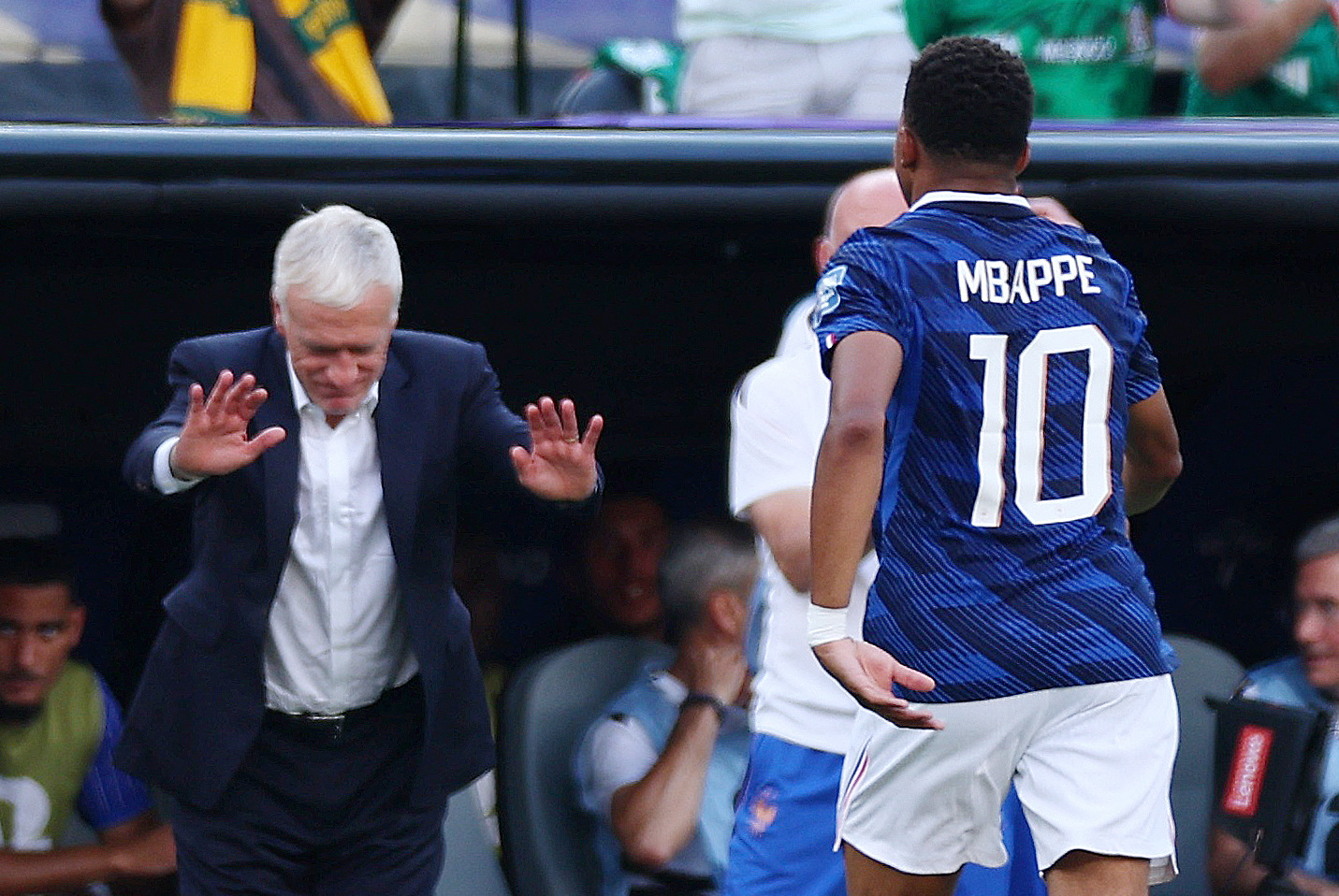
Kylian Mbappé: 6 goals, 2 assists
Ousmane Dembélé: 4 goals, 2 assists
Michael Olise: 5 assists
Bradley Barcola: 2 goals, 1 assist
Désiré Doué: 1 goal
That means France’s attacking stars have combined for 13 goals and 10 assists through just four matches of this tournament.
Mbappé continues to build a case as the most dangerous tournament player of his generation. Every defense enters the match trying to stop him, and almost every defense fails. His six goals lead the Golden Boot race, while his pace remains football’s most terrifying weapon.
Dembélé has been just as devastating. Healthy and confident, he is finally showing the world the player many believed he could become. Four goals and two assists only tell part of the story. His movement, dribbling and unpredictability constantly force defenders into impossible situations.
Then there is Olise.
The Bayern Munich star has been the best playmaker at the World Cup, and frankly, it hasn’t been close. His five assists lead the tournament, and in his first-ever World Cup appearance he is already beginning to creep toward the all-time World Cup assist record of 10. Every time he receives the ball between the lines, something dangerous happens. He has formed a frightening partnership with Mbappé that looks nearly impossible to defend.
Barcola has quietly been the perfect complementary piece. While opponents focus on Mbappé and Dembélé, the PSG winger continues finding space and punishing defenses. His two goals and assist don’t fully capture how important his movement has been to France’s attack.
And somehow France can still bring Doué off the bench.
The 21-year-old has already scored in the tournament and provides yet another elite attacking option. Most countries would build their attack around a talent like Doué. France uses him as a luxury.
What separates this group from many great attacks throughout history is balance. There is no weak point. There is no player defenses can ignore. Every attacker can score, create, dribble, or stretch the field.
That is why comparisons are beginning to emerge with the greatest attacking teams ever assembled: Brazil 1970, Brazil 2002, Spain 2010, Germany 2014, and Argentina 2022.
The difference?
This France side may be even more explosive.
They don’t just control matches. They bury teams. One mistake can become a goal in seconds. One defender stepping out of position can turn into a three-on-two break. No lead feels safe against them.
The only thing left is the trophy.
If France lifts the World Cup while maintaining this level of dominance, the debate may no longer be whether this is one of the greatest attacks ever.
The debate might be whether anyone has ever been better.
Check out all EasySportz Soccer Content Here
View the World Cup Standings Here