Corey Heim Never Chased the Fast Track. That’s Exactly Why He’s Here.
There are certain drivers you just know are different.
Not because they win. Plenty of drivers win.
It’s because of how they come up.
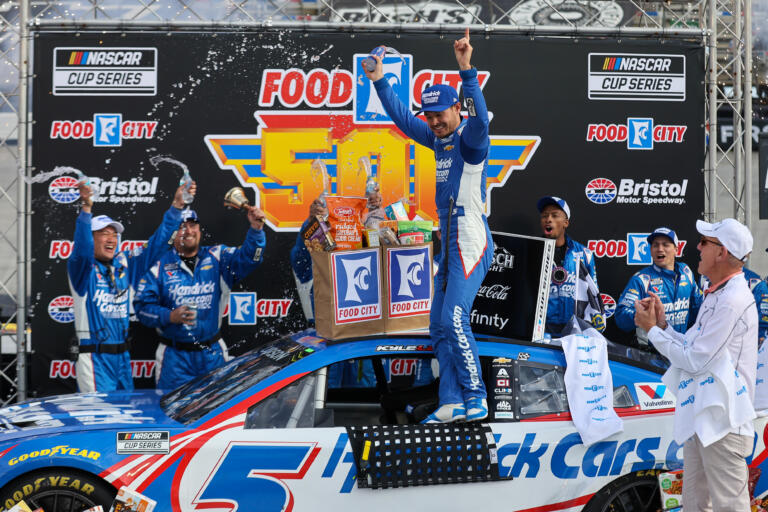
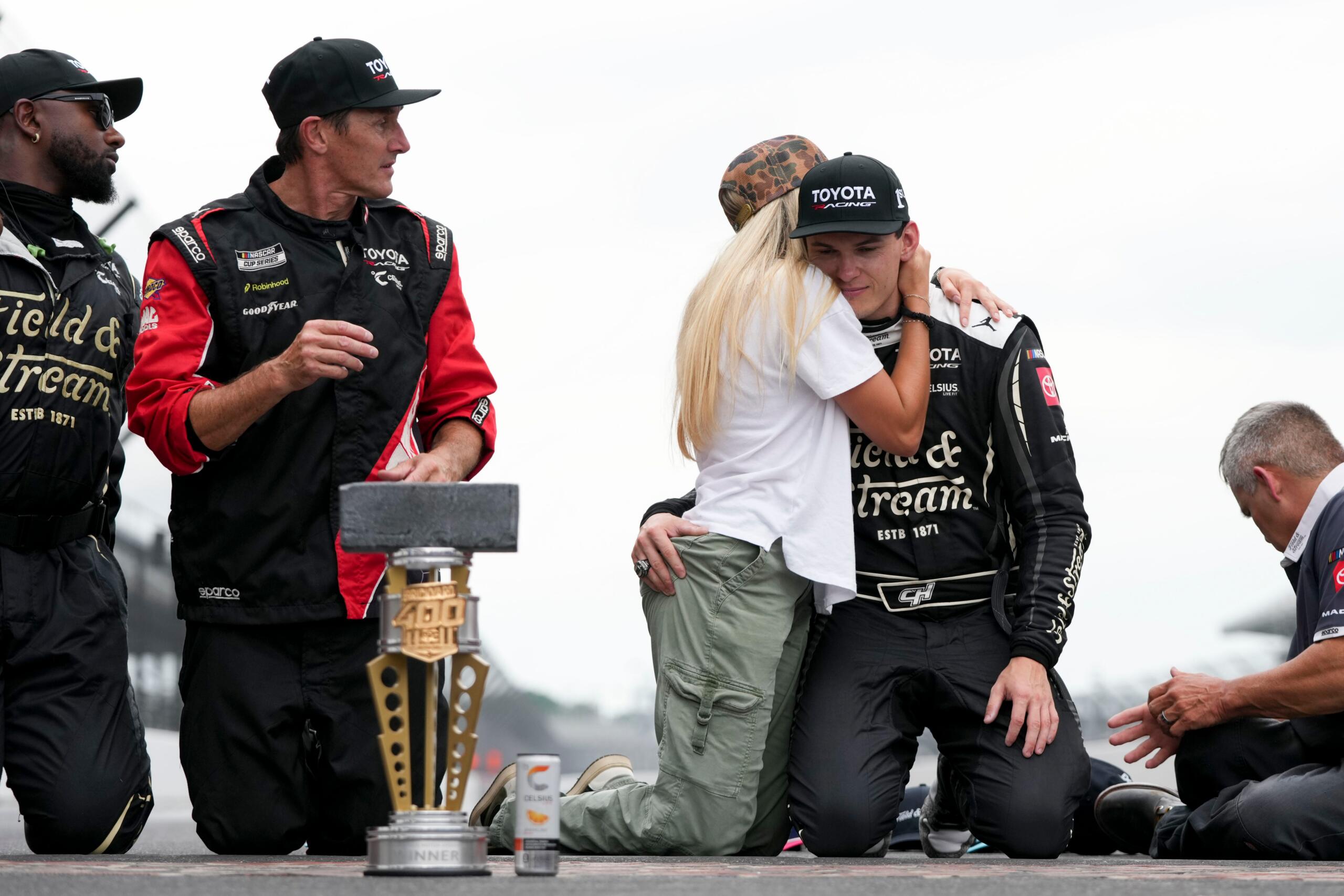
When Corey Heim climbed from the No. 67 Toyota after capturing his second NASCAR Cup Series victory Sunday in the Brickyard 400, much of the racing world reacted as if it had just witnessed the arrival of NASCAR’s next superstar.
The television cameras lingered.
Social media exploded.
Fans who hadn’t paid much attention before suddenly wanted to know where this kid came from.
The funny part?
He’s been here all along.
You just had to be paying attention.
Maybe I noticed because I’m a Georgia kid who grew up chasing this sport with a notebook in one hand and a pit pass in the other. Maybe it’s because I’ve always been fascinated by how drivers make it, not just that they make it.
Anybody can admire a trophy.
I’m more interested in the Tuesday nights.
The dirt races with no television cameras.
The late model shows where half the grandstands are empty.
The iRacing broadcasts only the diehards stay up to watch.
That’s where careers are quietly built.
That’s where Corey Heim separated himself.
I watched him win his first NASCAR Craftsman Truck Series race at EchoPark Speedway against a field full of veterans. I watched him trade punches with Ty Gibbs throughout ARCA, where the two looked destined to spend the next decade racing for NASCAR’s biggest prizes.
I also sat in the grandstands at Atlanta when Austin Hill spun Heim off Turn 2 on the final lap of what should have been his breakthrough O’Reilly Auto Parts Series victory. Heim wasn’t driving a powerhouse. He wasn’t backed by a blank check. In many ways, just putting that car in position to win was the accomplishment. And boy, did he do that, setting up a blank race car for an O’Reilly victory on the last lap.
Sometimes the finish doesn’t tell the story.
Sometimes the drive does.
That became even more obvious during the summer of 2022.
I was interning at FOX Sports in Charlotte, trying to carve out my own path in this industry. During the day, I learned around race shops and television production. At night, I’d find wherever the racing was and work on my personal notebook.
Millbridge Speedway.
A local late model race.
Cookout Summer Shootouts.
A Monday Night Racing iRacing event.
Nobody told me to go.
I went because I love racing.
And almost everywhere I went, there was Corey Heim.
One night he’d be throwing sliders on dirt at Millbridge.
The next he’d be racing Cup stars online.
Then he’d jump back into a late model somewhere in the Carolinas or go run part-time for KBM on Friday nights, giving Chandler Smith, Zane Smith and Ben Rhodes all they could handle.
He wasn’t chasing headlines.
He was chasing improvement.
That’s the part people miss.
Everyone notices talent.
Not everyone notices obsession.
Even in 2026, with million-dollar simulators, endless data and engineers capable of finding thousandths of a second, the heart of the driver still matters.
You can’t coach someone into loving the grind.
Corey Heim did.
That’s why the Truck Series alone never convinced me.
Winning in elite equipment is impressive.
It also happens more often than people think.
History is full of Truck champions and rising stars who looked destined for greatness before stalling in the Cup Series.
What convinced me about Heim was everything outside the Truck Series.
The Sam Hunt Racing starts.
The underfunded O’Reilly rides.
The races where a top-10 finish felt like a victory before the green flag ever waved.
Weekend after weekend, Heim extracted more from those cars than they had any business giving.
Sometimes he outran organizations with larger budgets.
Sometimes he simply kept himself in contention when the equipment said he shouldn’t.
Those weren’t lucky afternoons.
Those were auditions.
That’s how you evaluate future stars.
Anybody can drive a fast car to Victory Lane.
The truly special ones drag average cars somewhere they don’t belong.
Heim spent years doing exactly that.
Then came another crossroads.
After ARCA, many assumed Joe Gibbs Racing would be the obvious destination. Instead, that path never fully materialized. Past run-ins with Ty Gibbs complicated the picture, and suddenly the easy route disappeared.
A lot of young drivers would’ve panicked.
Some would’ve jumped manufacturers.
Others would’ve accepted the first full-time Cup ride available, even if it meant sacrificing their long-term future for short-term satisfaction.
Heim never blinked.
He stayed loyal to Toyota.
He stayed with TRICON Garage and won a Truck Series championship, while setting records.
He kept racing late models.
He kept showing up at Millbridge.
He kept sharpening his craft on iRacing.
He kept taking part-time opportunities with Sam Hunt Racing, Legacy Motor Club and eventually 23XI Racing.
Most people saw a driver waiting.
I saw a driver preparing.
There’s a difference.
In an era obsessed with instant gratification, Corey Heim chose delayed gratification and ultimately, the right path.
He believed becoming a better race car driver mattered more than becoming a Cup driver as quickly as possible.
That takes confidence.
It also takes humility.
Heim knew he was talented enough years ago.
Instead of demanding more, he demanded more from himself.
Now comes the payoff.
A Truck Series championship.
Two Cup victories before ever becoming a full-time rookie.
A full-time opportunity with 23XI Racing beginning next season, one of the premier organizations in NASCAR.
And perhaps the most terrifying part for the rest of the garage?
He’s just getting started.
Think about what his first two Cup victories represent.
One came on the tight, technical streets of Naval Base Coronado, where precision leaves no margin for error.
The other came at Indianapolis Motor Speedway, winning one of NASCAR’s most prestigious crown jewels in his first ever visit to the Brickyard.
Two completely different disciplines.
Two completely different challenges.
One common denominator.
For most drivers, winning on a street course and adding a Brickyard 400 trophy would define an entire career.
For Corey Heim, it happened before he officially begins his rookie season in the Cup Series.
That’s not luck.
That’s not timing.
That’s years of maximizing every opportunity placed in front of him.
Watching it unfold has been especially rewarding for those of us from Georgia.
You remember seeing him before the autograph lines stretched around the hauler.
You remember the local tracks.
You remember the nights when the only people watching were the ones who truly loved racing.
You remember a kid who never seemed satisfied with being good enough.
He always wanted another race.
Another lap.
Another chance to improve.
Sunday wasn’t the day Corey Heim announced himself.
He announced himself years ago.
Sunday was simply the day the rest of the racing world finally stopped long enough to notice.
There is a lesson in that.
We’re conditioned to chase the quickest path to success.
Corey Heim chased mastery instead.
He didn’t become a great driver because he finally got a great Cup car.
He got a great Cup car because he spent years proving he could outrun the race cars he was given.
In the end, that’s what Sunday’s Brickyard 400 was really about.
Not the birth of a superstar.
The payoff of a process.
Good on you, kid.
You earned every lap of it.
Boy, are 23XI Racing smiling right now.
Check out the latest articles from EasySportz
Check out the latest FIFA World Cup scores