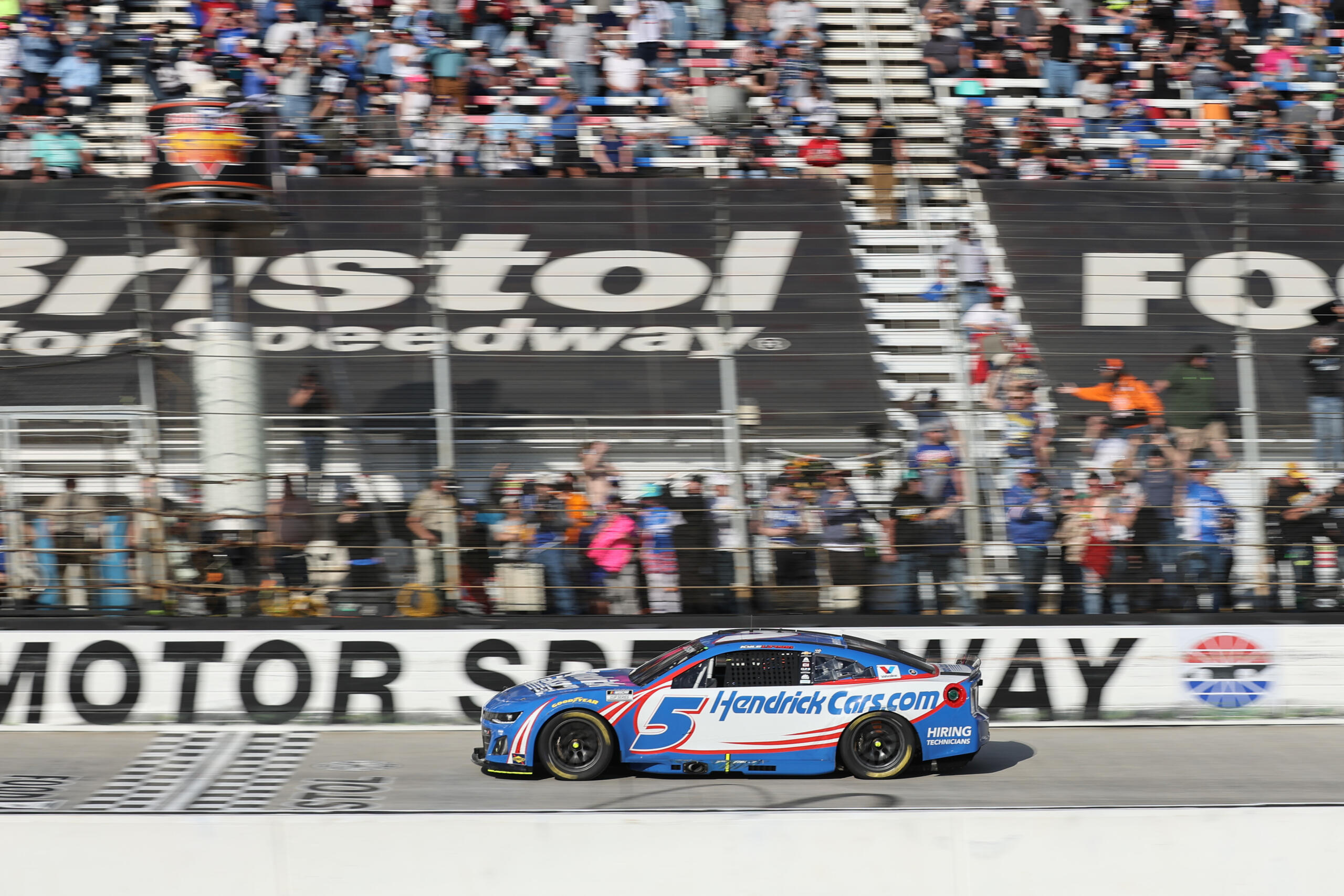
BRISTOL, Tenn. — Bristol Motor Speedway has long been one of NASCAR’s most iconic venues. From its spring race with a misty mountain backdrop to the electric atmosphere of the late-summer night race, Bristol spent decades as must-watch television regardless of the event.
In the Next Gen era, however, the track has become one of the most unpredictable on the schedule.
Since the introduction of the current car in 2022, Bristol has produced wildly different styles of racing. The 2022 night race featured tire issues throughout the field, with limited passing for the lead. Chris Buescher ultimately won through pit strategy in a race defined more by survival than competition.
One year later, the 2023 night race told a different story. With minimal tire falloff and limited action at the front, Denny Hamlin led the final 135 laps in a relatively straightforward victory, as lead changes and cautions were both limited.
Then came the return of the Bristol spring race. In 2024, a softer tire compound introduced significant wear, producing 54 lead changes and constant movement throughout the field despite only nine cautions. Hamlin again found Victory Lane, but the race itself was widely viewed as a success.
That momentum, however, did not carry over consistently. The 2024 night race and 2025 spring event both returned to a more static style, with limited tire falloff and fewer lead changes. Kyle Larson dominated those races, leading a combined 873 of 1,000 laps.
Yet just when a pattern seemed to emerge, the 2025 night race reintroduced heavy tire wear and unpredictability, with Christopher Bell capitalizing on a late restart to take the win.
Through six races in the Next Gen era, Bristol has delivered three distinct styles: high tire wear and chaos, low falloff and track-position racing, and a middle ground somewhere in between.
So what should be expected this weekend?
Track temperature could be a key factor. In recent seasons, varying conditions between spring and fall races have coincided with different racing styles. With Sunday’s forecast sitting near the middle, conditions may once again leave the outcome uncertain.
Adding to that unpredictability is NASCAR’s increase in horsepower from 670 to 750, which could further impact tire wear and handling.
At Bristol, the only certainty in the Next Gen era is uncertainty — and that may be what makes this weekend’s race one to watch.
Check out all EasySportz NHL Content Here
College Football Viewing Guide