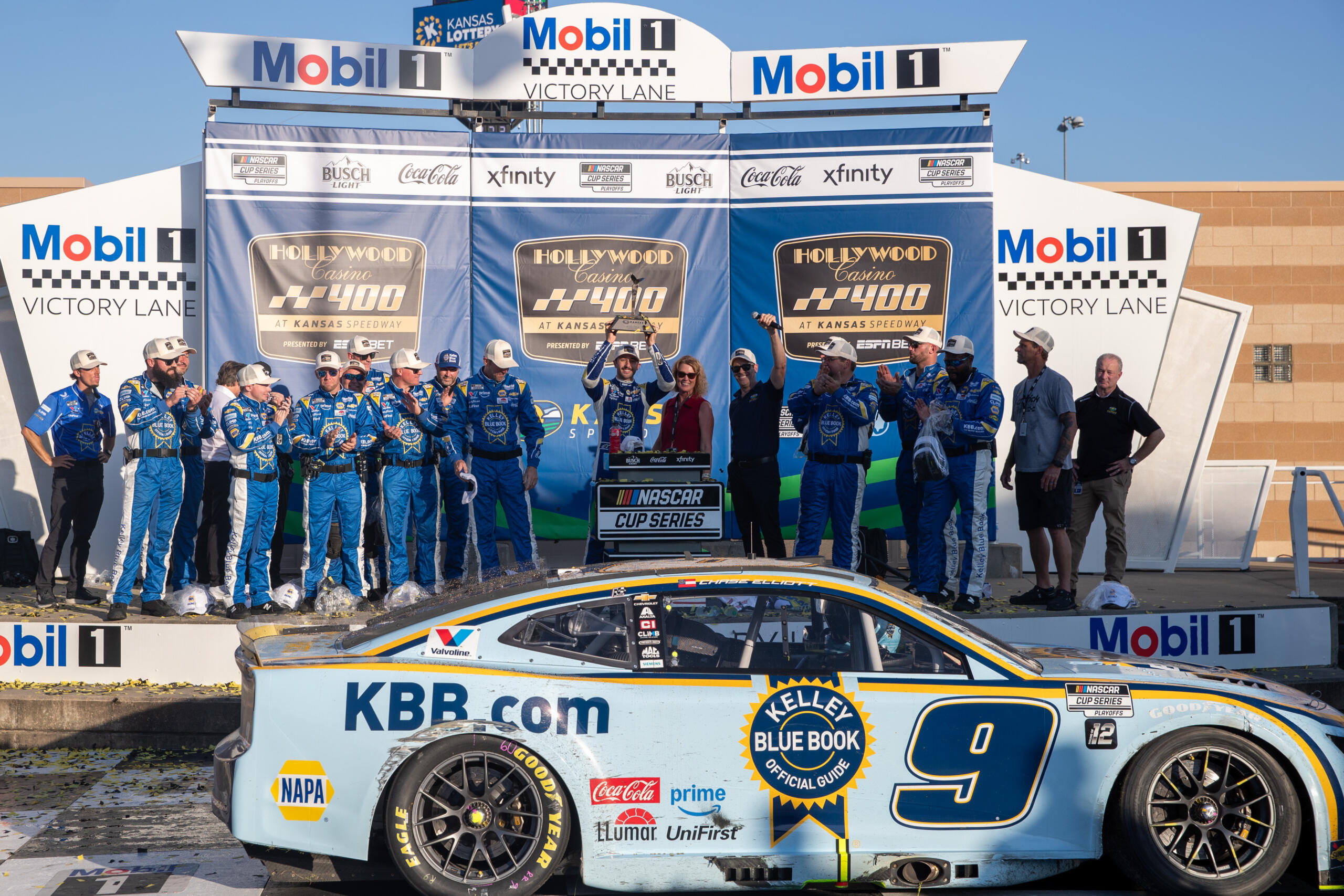
KANSAS CITY, Kan. — When Kansas Speedway opened in 2001 during NASCAR’s expansion boom, it was often viewed as just another mile-and-a-half oval — a “cookie-cutter” track designed to grow the sport’s presence in new markets.
More than two decades later, that perception has changed dramatically.
Early in its history, Kansas produced solid but often overlooked racing. Jeff Gordon won the inaugural event in 2001 on his way to his fourth championship, and moments of excitement followed in the years ahead. In 2004, Joe Nemechek edged Ricky Rudd in one of the track’s first memorable finishes. The mid-2000s also featured notable moments, including wins by Mark Martin and Tony Stewart.
Still, like many intermediate tracks of the era, Kansas often blended into the schedule. That began to change in 2012, when the speedway underwent a major reconfiguration, introducing progressive banking that allowed multiple racing grooves. While the change was met with mixed reactions at the time, it ultimately helped reshape the racing product.
By the late 2010s, Kansas had developed a reputation for competitive racing, particularly during its night events. That momentum carried into the Next Gen era, where the track has become a consistent highlight on the schedule.
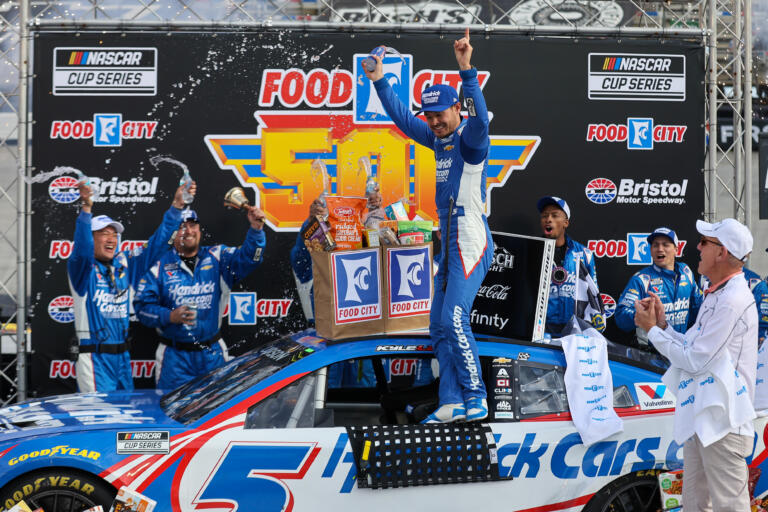
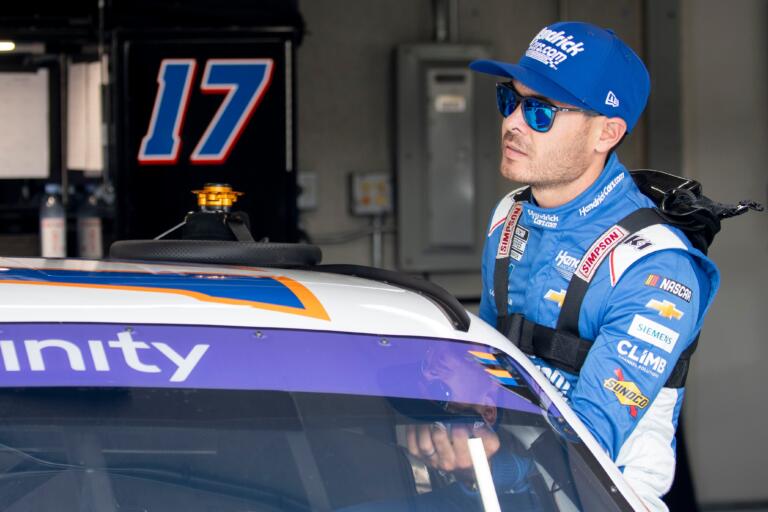
Recent races have only strengthened that reputation. In 2022, Kurt Busch captured his final career victory at Kansas after holding off a late charge from Kyle Larson. One year later, Denny Hamlin made contact with Larson on the final lap before taking the win, adding another dramatic chapter to the track’s history.
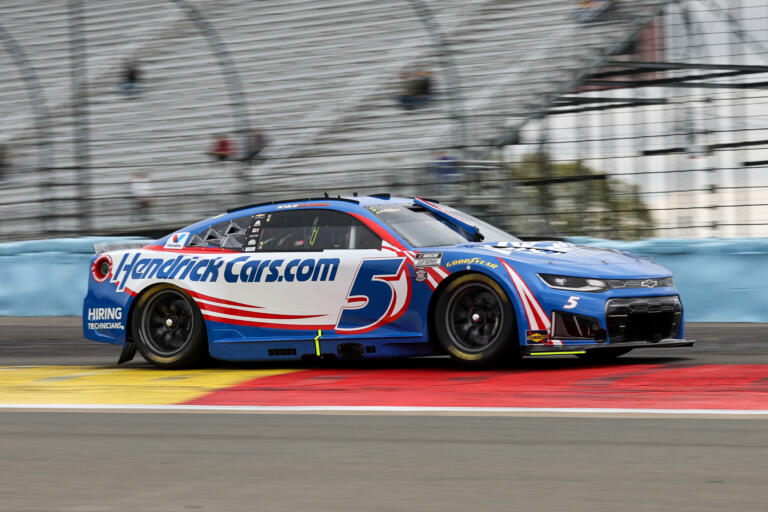
Then, in 2024, Kansas delivered one of the closest finishes in NASCAR Cup Series history, as Larson narrowly defeated Chris Buescher in a photo finish measured at just .001 seconds.
While tracks like Atlanta Motor Speedway and Charlotte Motor Speedway each offer their own style of racing, Kansas has emerged as one of the most complete venues in the sport.
What was once considered just another intermediate track has evolved into one of NASCAR’s best — and today, Kansas Speedway stands as a model for how a track can redefine itself over time.
Check out all EasySportz NHL Content Here
College Football Viewing Guide