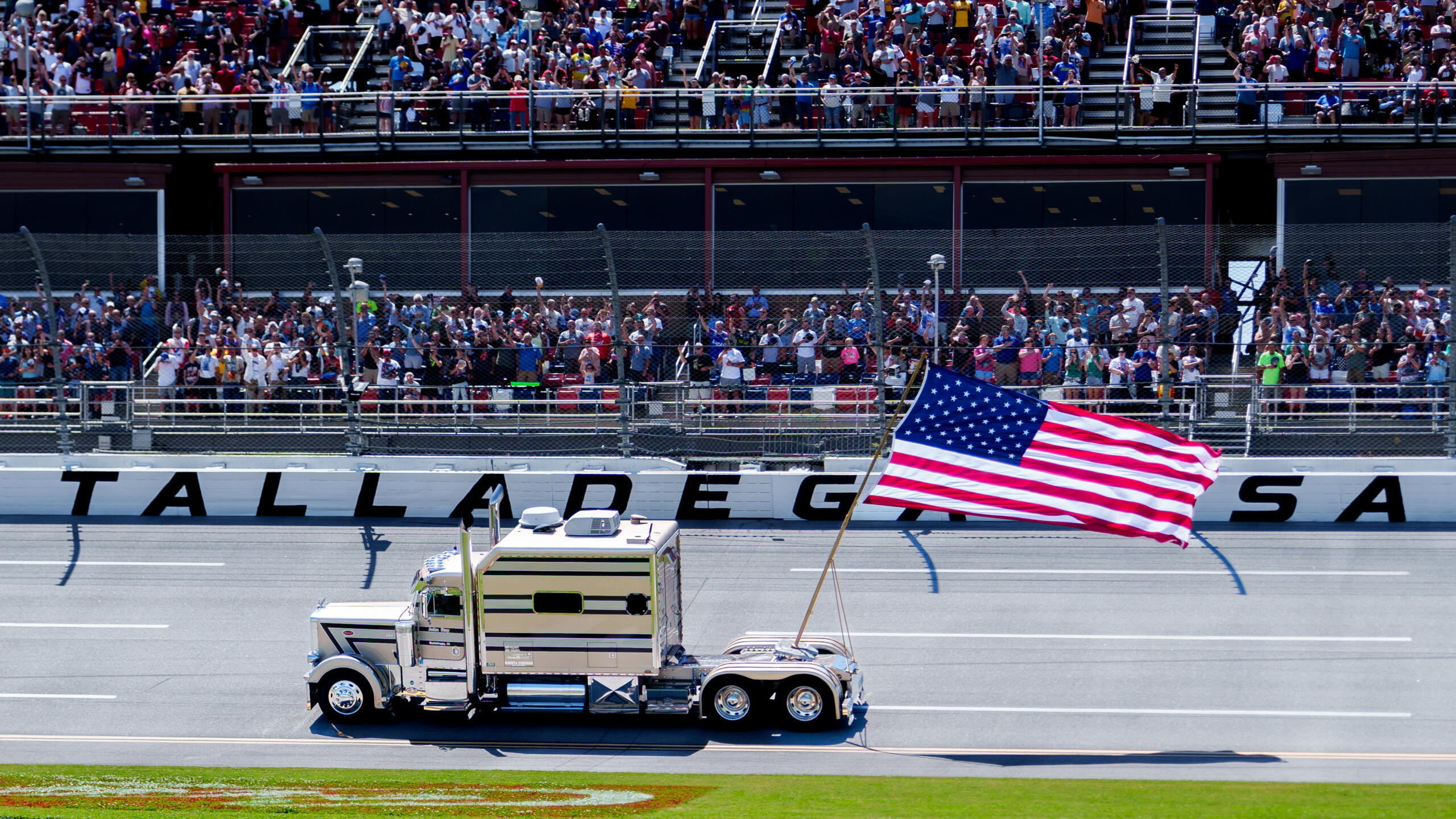
TALLADEGA, Ala. — Carson Hocevar delivered the moment NASCAR wanted Sunday — a win at Talladega Superspeedway capped by an over-the-top celebration that turned into instant highlight material.
The result checked every box: first-time winner storyline, viral burnout, and a post-race scene that had fans buzzing. It was the kind of finish NASCAR often points to when talking about energy, personality and entertainment value.
But for those who spent the weekend watching the full spectrum of racing at Talladega — from Saturday’s NASCAR O’Reilly Auto Parts Series event to Sunday’s Cup race — the contrast raised a familiar question: is this track being used to its full potential at the top level?
Saturday’s race offered a clear answer.
The O’Reilly-level event featured multiple lanes of racing, consistent passing, minimal fuel-saving and a natural rhythm that allowed drivers to race hard from the start to the finish. The field spread out, regrouped and attacked again. Track position mattered, but so did execution. It looked like Talladega at its most dynamic.
Sunday’s Cup race, by comparison, told a different story.
Stage 1 unfolded largely as a fuel-saving procession. Once strategy tightened, the field settled into extended stretches of two-wide gridlock, with limited movement and few meaningful attempts to break the draft train. Track position became everything, and passing opportunities were scarce until the final laps.
The ending still delivered drama — it usually does at Talladega — but the path to get there felt restrained.
That’s the tension NASCAR continues to navigate at drafting tracks. The current format, combined with aerodynamic sensitivity in the Cup Series, often produces races that build toward a finish but compress action in the middle stages. Stage racing can heighten late-race importance, but it can also leave large portions of the event feeling static.
For fans and media members who have seen what Talladega can produce when the pack is more fluid, the difference is noticeable.
The ideal version of this race exists in pieces: Saturday’s movement, Sunday’s stakes and the natural unpredictability that makes Talladega unique. The challenge is combining all three without sacrificing one for the other.
Drivers, too, have voiced fatigue with long stretches of managing fuel and air rather than racing aggressively. Fans, meanwhile, want closer competition throughout the entire event, not just at the finish.
None of this takes away from Hocevar’s breakthrough or the excitement it generated. His win and celebration provided the kind of moment that travels well beyond the track and gives the sport a needed spark.
But it also underscores a larger point.
Talladega is already one of NASCAR’s most important venues. The product, at its best, is unmatched. The question moving forward is whether the Cup Series version can consistently match the energy seen in the lower series and in the track’s most chaotic moments.
There is room to improve it.
And based on Saturday’s blueprint, NASCAR already has a version of what it could look like.
Now it just needs to find a way to bring that version to Sunday.