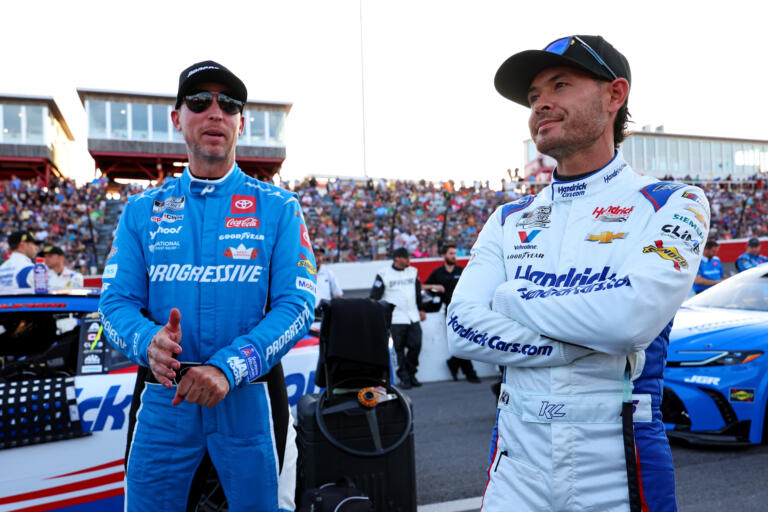
There are few places in motorsports that feel like a cathedral quite like Bristol Motor Speedway.
It is massive, intimidating, and unmistakably American. A half-mile concrete coliseum carved into the Tennessee hills, it dwarfs even the most iconic college football stadiums in presence and atmosphere. When it’s full, it feels like the center of the racing universe.
And that’s exactly why this hurts to say: Bristol doesn’t need two Cup dates anymore.
This isn’t written from a place of cynicism. It’s written from love — the kind built over years of attending races, chasing tickets, doing everything possible in college just to make it to the Bristol Night Race. The kind of love that understands what this place should feel like… and what it increasingly does not.
The Bristol Night Race is still one of the crown jewels of NASCAR, whether you want to include it on the official list or not. It is everything this sport is supposed to be: loud, chaotic, emotional, and unforgiving. It sells itself. It always has.
The spring race, however, no longer carries that same gravity.
The on-track product has not kept pace with the expectation. The modern NASCAR Cup Series car — the Next Gen platform — has brought parity to intermediates, but it has also made short-track racing more processional than it should be and fans are facing fatigue from it. For the average diehard, whom I speak to at numerous tracks across the season, it’s better to go to a Saturay night local race in the Carolina’s for short-track fix, at a much cheaper cost. Daytona is Daytona and Talladega will always be Talladega. In recent years, Atlanta has surged into top ticket conversations too. But Bristol? It’s becoming hard to justify going twice a season.
Sure, NASCAR has made some adjustments: horsepower tweaks, tire changes, aero updates. It has helped around the edges.
But not enough.
Bristol, once defined by bumpers moving people out of the way and chaos erupting at every restart, too often becomes a track position race where passing is limited and execution on pit road matters more than aggression on the track. Sure, that’s typical short track racing in a way, but the NextGen is way too smooth for this track.
Fans crave usage of the bumper like at Martinsville, tire-saving at Richmond or door-to-door action, not a single file fishbowl.
That matters. Because if fans are going to drive hours — or fly — to a remote part of Tennessee, they expect more than a parade.
And then there’s everything around the racing.
In today’s NASCAR economy, the diehard fan is being stretched thin. The southeastern schedule is clustered tightly: Daytona 500, EchoPark (Atlanta) Motor Speedway race, Darlington Raceway race, Martinsville Speedway race, Rockingham (Trucks / O’Reilly), Bristol, Charlotte, Nashville, and more all stacked within weeks. Throw in an exhibition at Bowman Gray to kick things off too, if you’d like.
At some point, even the most loyal fan has to make choices.
It’s not just money — though that matters more than ever with rising ticket prices, hotel costs, and travel inflation. It’s logistics. Try explaining to a spouse, employer, or family that you’ll be gone nearly every weekend for two months chasing races across the South. Even for the hardcore base, that’s becoming harder to justify.
Media loves convenience — but fans need spacing. Unless you are retired or hit the lottery, I do not see a viable path for a family or even a diehard to hit Darlington, Martinsville, Rockingham and Bristol four weekends in a row. Much less two or three of them.
The calendar could breathe more. Then a reset before returning later in the season. Instead, everything is packed so tightly that even passionate fans are forced to pick favorites.
And that brings us back to Bristol. The Night Race is still special and worth marking on the calendar. The spring date gets overshadowed each year by Easter or Augusta, plus other tracks in the region.
The pricing structure only adds to the tension. Bristol markets itself — correctly — as a premium event. It is one. But in an era where attendance has softened across many venues, pricing strategy matters. A slight reduction, even in the $50 range instead of $70-plus in certain sections, could help restore volume and atmosphere without devaluing the brand.
Because an empty Bristol is worse than a cheaper Bristol.
And that’s the most painful part.
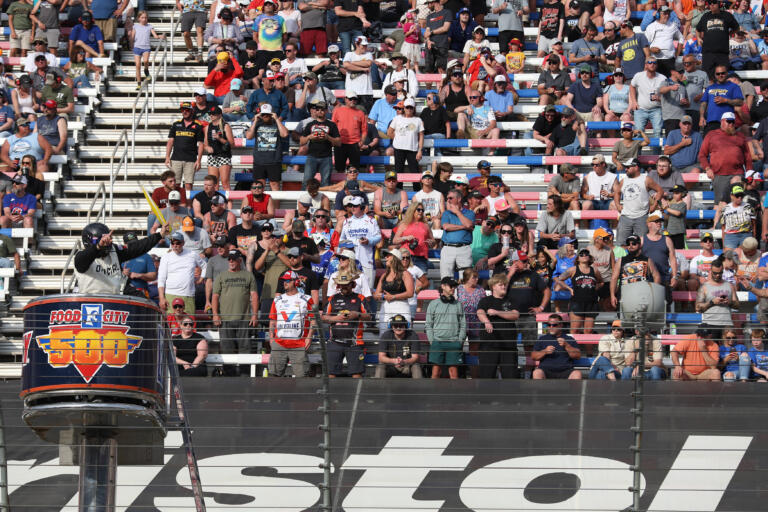
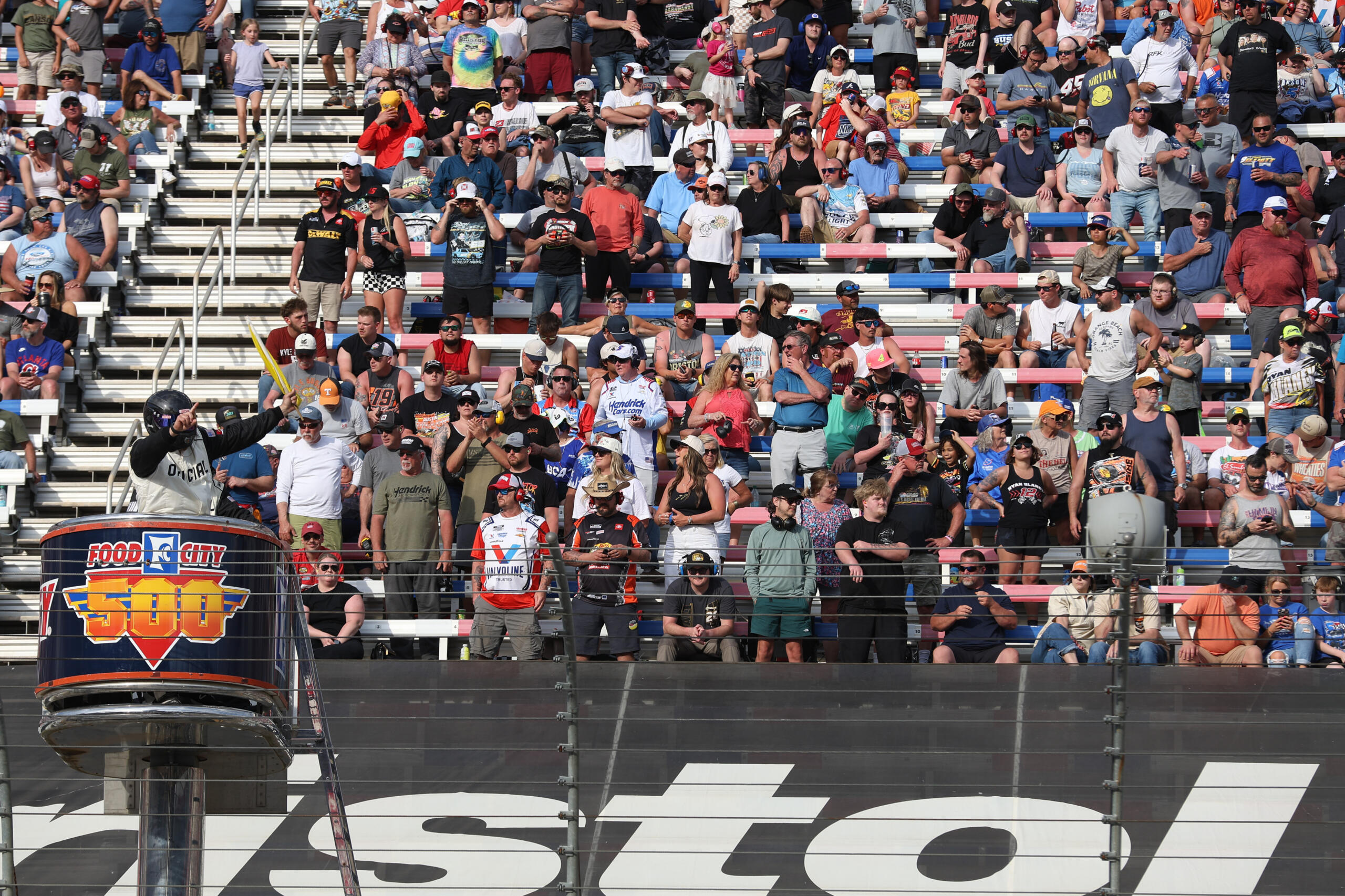
The track was once a 146,000-seat amphitheater roaring at capacity. In its prime, it was a place where every seat mattered, often eclipsing 160,000 fans. Now, sections of empty grandstands sit as a quiet reminder of a different era — not because the track lost its identity, but because the sport around it changed faster than its model did.
Depending on who you may ask, many race fans will tell you Bristol lost its luster when Dale Earnhardt. Sr. died or when they reconfigured it in 2007 to the progressive banking.
Others will list off PJ1 as a gimmick or the original change from asphalt to concrete as the true reason.
This is where the hard truth comes in.
Bristol may be better served today with one premier Cup date — and that date is already obvious. The night race is untouchable. It is one of NASCAR’s defining events, period.
If the sport is serious about maximizing its most iconic venues, it should consider consolidating rather than stretching thin.
That opens the door for creativity elsewhere: more rotation in the schedule, the return of historic venues like Rockingham Speedway, movement of road courses like Sonoma into better calendar positions where the grass is green, and a more balanced regional flow that doesn’t overload the Southeast for six straight weeks.
And yes, it forces a difficult question: what does Bristol become next?
The honest answer is that it still becomes something special — just in a different way. One race, fully focused, fully supported, fully sold as the must-see event it already is.
The alternative is harder to accept.
Because if the current model continues — with oversupply, declining demand, and a product that doesn’t consistently match the venue’s greatness — the long-term risk isn’t just empty seats.
It’s structural decline.
That could eventually lead to something even more painful: reduced capacity, tarp-covered sections, or reconfigured grandstands to create a more “modern” footprint. A stadium that once felt like a coliseum could be scaled down simply to preserve optics.
And for anyone who truly loves Bristol, that should be the final warning sign.
Because this isn’t about taking something away.
It’s about protecting what matters most.
Bristol is still one of NASCAR’s great treasures. It still matters. It still matters a lot.
But greatness in sports doesn’t guarantee immunity from change.
Sometimes, the most respectful thing you can do for a legend is stop asking it to do too much.
Bristol Motor Speedway is one of my favorite places in the world. I would get married atop the grandstands if I could.
But we need to face reality here and either sprinkle in a few concerts and stick and ball events each year, with one special race date or it’s time to start taking out seats.
The decision rests in the hands of SMI and NASCAR, but regardless of preference, it is long overdue.
Ty Gibbs captured the checkered flag Sunday evening in a sparsely attended Thunder Valley to cap another spring Bristol weekend. Connor Zilisch won O’Reilly on Saturday. Christopher Bell took home the trucks win on Friday.
And yet, now I’m left wondering, what lies ahead for this storied track?
I can’t see the beloved Bristol I grew up on go out like this.
As the great Billy Beane once famously said, “Adapt or die”.
Check out all EasySportz NHL Content Here
College Football Viewing Guide