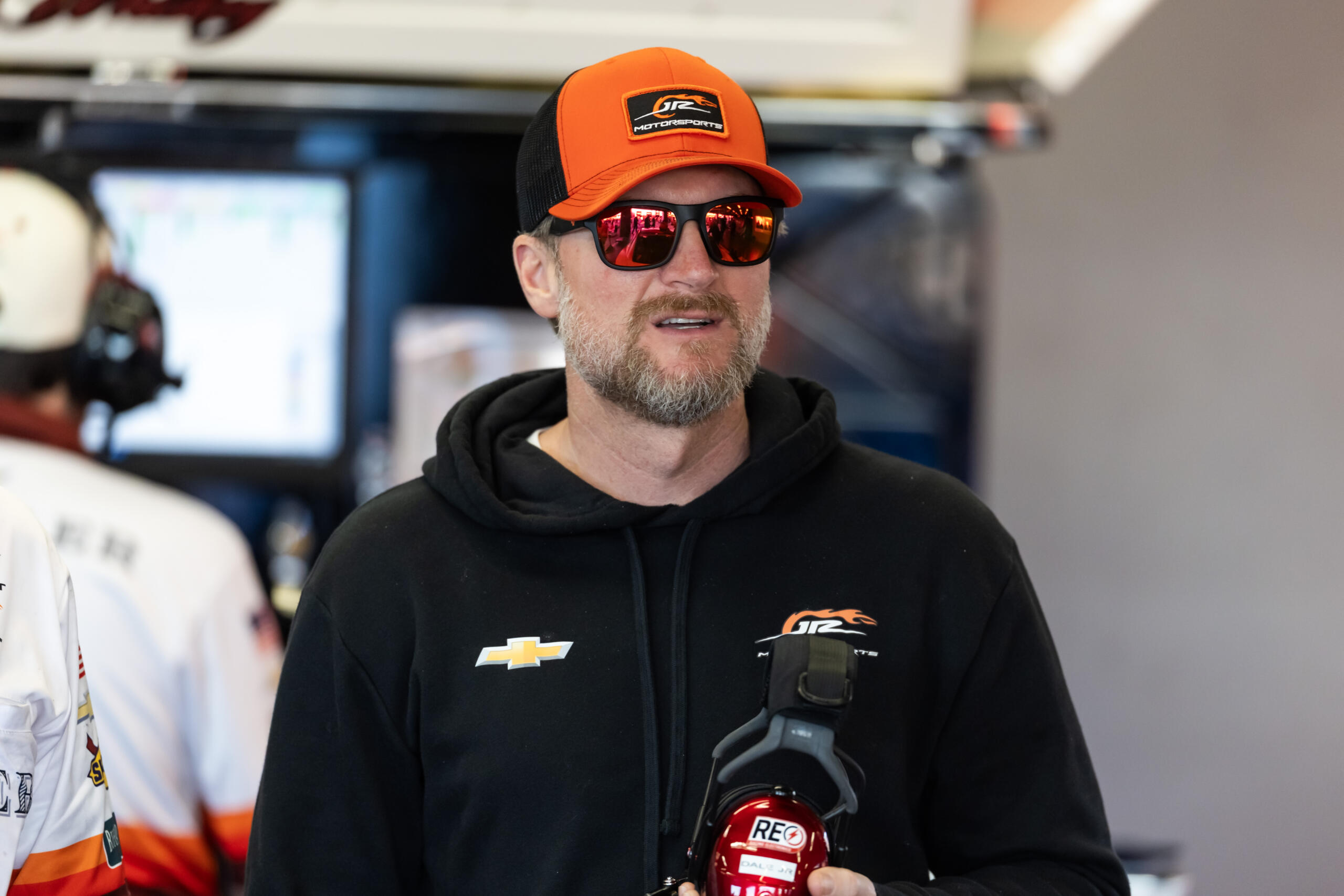
MOORESVILLE, N.C. — NASCAR legend Dale Earnhardt Jr. offered measured but pointed advice to fan favorite Cleetus McFarland during a February episode of The Dale Jr. Download that resonates sharply after this week’s announcement that McFarland will compete in the NASCAR O’Reilly Auto Parts Series spring race at Talladega Superspeedway for Richard Childress Racing. Earnhardt, one of the sport’s most respected voices and a co-owner of the CARS Tour, publicly applauded McFarland’s passion and marketing prowess — but also counseled patience in McFarland’s ascent through stock car racing’s ranks.
On the long-running Dirty Mo Media podcast, Earnhardt lauded McFarland’s journey from YouTube creator and short track enthusiast to legitimate racing contender. The conversation, which reached millions globally, acknowledged McFarland’s resonance with new and traditional fans alike. However, Earnhardt also urged a more deliberate progression through grassroots racing — specifically recommending more late model starts in the Carolinas and within the burgeoning CARS Tour before jumping into high-profile national series competition.
“You don’t want to be rushed in this sport,” Earnhardt told McFarland, emphasizing that late model experience on challenging asphalt tracks builds discipline, racecraft and instincts that pay dividends at NASCAR’s higher levels. His point: mastering the fundamentals can make transitions smoother and safer, particularly on superspeedways like Talladega where pack dynamics and aerodynamics complicate every move.
Earnhardt’s advice underscores a broader narrative in stock car racing about balancing excitement with experience. McFarland’s social media reach — spanning millions of followers across platforms — is undeniable and has translated into unprecedented engagement for series like ARCA and NASCAR Craftsman Truck, where McFarland has previously competed. That audience growth draws sponsors, lifts digital viewership and introduces fresh eyeballs to a sport that constantly seeks relevance with younger fans and broader demographics.
Still, the veteran voice of Earnhardt — himself a prolific competitor and media figure — stressed that NASCAR’s ladder system exists for a reason. Late model competition on short tracks in the Southeast has historically groomed future national stars. Drivers such as Jeff Gordon, Kyle Larson and Chase Elliott all logged extensive late model laps before asserting themselves at NASCAR’s top levels, and Earnhardt sees value in McFarland following a similar path.
The timing of this counsel feels prescient amid McFarland’s Talladega O’Reilly entry. Talladega’s 2.66-mile superspeedway is one of NASCAR’s most challenging circuits, where aerodynamic drafting and split-second decisions determine outcomes. Even seasoned veterans cite Talladega as a track that humbles the unwary, reinforcing Earnhardt’s point about building racecraft before tackling such formidable terrain.
McFarland’s rise nonetheless marks a significant evolution in how motorsports personalities can influence the sport. His ability to generate views, attract sponsors and pull fans into NASCAR events adds commercial value that teams and series executives prize. NASCAR’s recent embrace of content creators and crossover personalities reflects a strategic shift toward capturing broader attention in a crowded entertainment landscape, and McFarland stands at the forefront of that movement.
Still, Earnhardt’s guidance echoes in the background — a reminder that short tracks and late model battles are more than nostalgic footnotes. They are developmental crucibles where instincts, patience and race strategy are sharpened. As McFarland prepares for his Talladega debut, one can almost picture Earnhardt, a seasoned veteran and thoughtful mentor, shaking his head with that familiar mix of encouragement and caution.
Ultimately, the dialogue between NASCAR tradition and modern celebrity underscores the sport’s ongoing evolution. McFarland’s entry at Talladega might attract headlines and views, but Earnhardt’s message — build it slow, build it right — remains a timeless prescription for long-term success in stock car racing.
Whether McFarland follows it to the letter or uses it as a philosophical anchor, the sport will be watching — and NASCAR’s next chapter may be richer for having both voices in play.
Check out all EasySportz NHL Content Here
College Football Viewing Guide