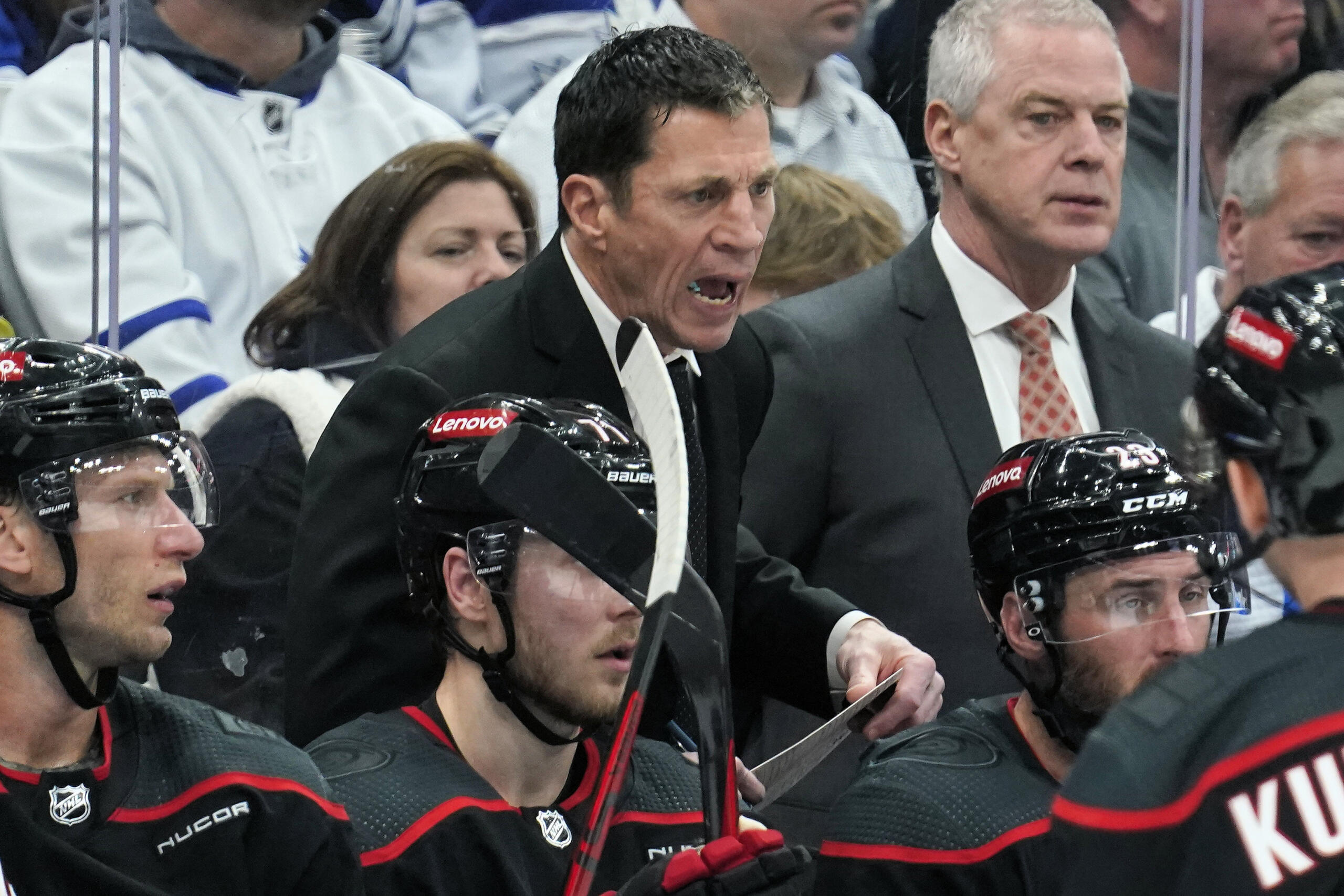
RALEIGH, N.C. — The Carolina Hurricanes are once again one of the NHL’s best regular-season teams.
That much is not up for debate.
Carolina sits near the top of the Eastern Conference with a 39-16-6 record, boasting one of the league’s best goal differentials and a balanced attack led by players like Sebastian Aho and Seth Jarvis.
Under coach Rod Brind’Amour, the Hurricanes have also become one of the NHL’s most consistent organizations, reaching the playoffs seven consecutive seasons, one of the longest active streaks in the league.
All of that deserves credit.
But the Hurricanes’ biggest problem is not October through March.
It’s what happens after.
For all their structure, speed and analytics-driven roster building, Carolina has repeatedly stalled when the Stanley Cup gets within reach. Last season was a perfect example: the Hurricanes advanced deep into the playoffs again — only to be eliminated in the Eastern Conference Final by the eventual champion Florida Panthers.
Worse, the trend has become historic for the wrong reasons. Carolina has endured a staggering losing streak in Eastern Conference Final games, highlighting how often the franchise has run into a wall at the same stage of the postseason.
That’s where the criticism begins.
The Hurricanes are a machine in the regular season — aggressive forechecking, excellent puck possession and strong depth scoring. But when the playoffs become heavier, nastier and more physical, Carolina too often looks like a team built to win analytics models, not playoff series.
This is where the front office must act.
General manager Eric Tulsky runs one of the smartest operations in hockey. The Hurricanes draft well, develop talent and manage the salary cap efficiently.
But smart teams still have to take risks.
The Eastern Conference is wide open. Carolina already has a Cup-caliber core and a coach who knows what championship hockey looks like — Brind’Amour captained the franchise’s lone Stanley Cup team in 2006.
Standing pat now would be a mistake.
The Hurricanes need more scoring punch down the middle and more certainty in goal if they want to survive four playoff rounds against heavier contenders like Florida, Tampa Bay or Boston.
Regular-season dominance is a great foundation.
But banners are not raised for March.
If the Hurricanes truly believe this roster is close — and the standings suggest they are — then the trade deadline should not be approached cautiously.
It should be attacked.
Because until Carolina proves it can break through in the Eastern Conference Final, the story will remain the same:
A brilliant regular season.
And a championship that always stays just out of reach.
Check out all EasySportz NHL Content Here
College Football Viewing Guide