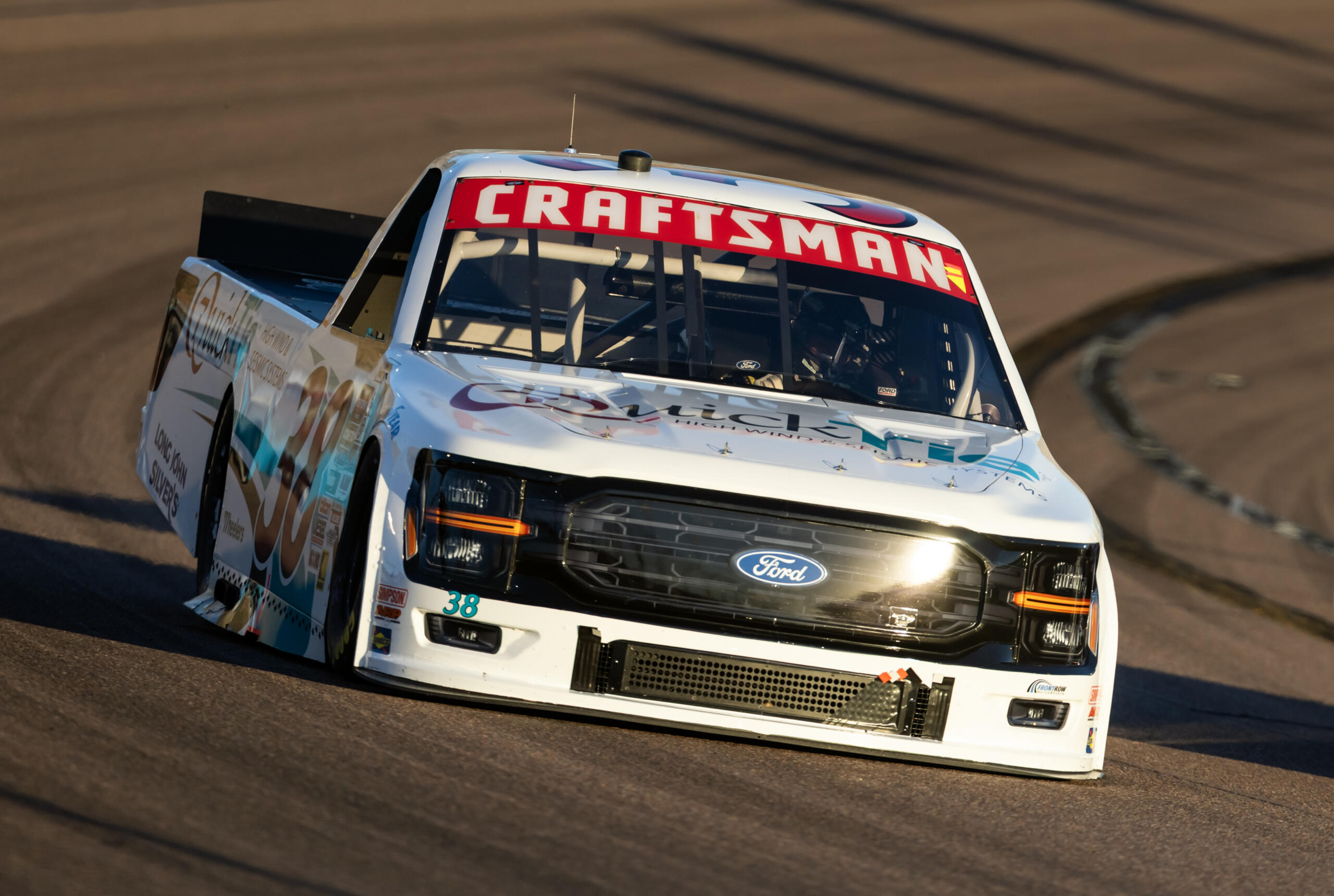
DAYTONA BEACH, Fla. — If you enjoy horsepower, questionable life decisions at 190 mph and pickup trucks behaving like fighter jets in a Walmart parking lot, welcome to the Fresh From Florida 250 at Daytona International Speedway.
The season opener for the NASCAR Craftsman Truck Series returns to the 2.5-mile superspeedway Friday night, where 36 trucks will attempt 100 laps — 250 miles — of aerodynamic brinkmanship. The math is simple. The survival rate? Historically less so.
According to historical data compiled by Racing Reference, the Daytona Truck race has produced double-digit lead changes in nearly every modern running, often north of 20. Last year’s edition featured more than 30 lead changes among double-digit drivers, continuing a Daytona trend where drafting partners turn into rivals roughly every 12 seconds.
This is not racing. This is synchronized chaos.
Tony Stewart is back. Cleetus McFarland makes his NASCAR debut. Carson Hocevar is running his third of five races for speedweeks. Daytona 500 winner Ricky Stenhouse Jr. is in the field. What more do you need?
The Numbers That Matter
Daytona’s 31 degrees of banking in the turns and 18 degrees on the tri-oval create sustained full-throttle conditions. Trucks run wide open for nearly the entire lap, meaning track position hinges on:
- Draft efficiency
- Manufacturer alliances
- Restart lane choice
- Who decides to get bold at the wrong time
Recent Daytona Truck races have averaged winning speeds in the 150–170 mph range due to caution interruptions, but green-flag runs push well above 180 mph in the draft. The closing laps typically compress the top 10 within one second.
One second at Daytona is about five truck lengths. Or one bad idea.
Superspeedway Reality Check
The Fresh From Florida 250 has become a proving ground. Past winners include veterans who understood patience and younger drivers who treated physics as a suggestion.
Superspeedway stats show that track position inside the top five with 10 laps remaining dramatically increases win probability. However, data from recent races also shows that being third on the final restart may be more advantageous than leading — because at Daytona, the leader is essentially a windbreaker.
As Jayski’s historical breakdown notes, overtime finishes have become common in recent superspeedway events across NASCAR’s national series. That means the advertised 100 laps is more of a suggestion than a promise.
Bring snacks.
Manufacturer Chess Match
Ford, Chevrolet and Toyota typically organize into brand-specific drafting lines. At Daytona, cooperation lasts until about the white flag.
Recent superspeedway trends show Chevrolet frequently placing multiple trucks inside the top 10 late in races, while Ford has excelled at controlling outside-lane momentum. Toyota, meanwhile, has leaned on disciplined tandem pushes.
Translation: everyone has a plan. The plan lasts until someone blocks too aggressively entering Turn 3.
What History Tells Us
Racing Reference data shows Daytona Truck races routinely produce:
- 8–12 cautions
- 20+ lead changes
- Winners emerging from outside the top 10 in the final 15 laps
In other words, if your favorite driver is running 14th on Lap 85, relax. That’s basically the penthouse suite at this place.
Daytona rewards timing, not dominance.
The X-Factor
Monitoring team chatter and garage buzz this week, several crew chiefs emphasized clean pit stops — even in a race where green-flag stops are rare. Why? Because a slow stop at Daytona drops you from fourth to 24th faster than you can say “aerodynamic stall.”
And with stage breaks compressing the field, restarts become controlled demolition derbies with corporate sponsorship.
The driver who wins Friday night will likely:
- Avoid the Big One
- Execute two flawless restarts
- Have at least one drafting ally who doesn’t panic
That’s it. That’s the formula. Simple enough. Like landing a plane on a treadmill.
Why This Race Matters
The Fresh From Florida 250 isn’t just the opener. It sets the tone for the entire Truck season. Superspeedway wins carry playoff implications and momentum. Teams leave Daytona either feeling like geniuses or filing insurance paperwork.
And make no mistake: Daytona does not care about your preseason hype.
It humbles everyone equally.
Final Thought
The beauty of this race is its democracy. A powerhouse team can dominate 95 laps and lose. A mid-pack truck can time one perfect run and win. Data, analytics and experience matter — but so does luck, instinct and a healthy respect for air at 190 mph.
Friday night under the lights in Daytona Beach, 36 trucks will attempt to defy probability for 250 miles. Most won’t. One will.
And when the checkered flag falls, we’ll call it strategy, preparation and execution.
But deep down?
It’s Daytona.
And Daytona always gets the last laugh.
Check out all EasySportz NHL Content Here
College Football Viewing Guide