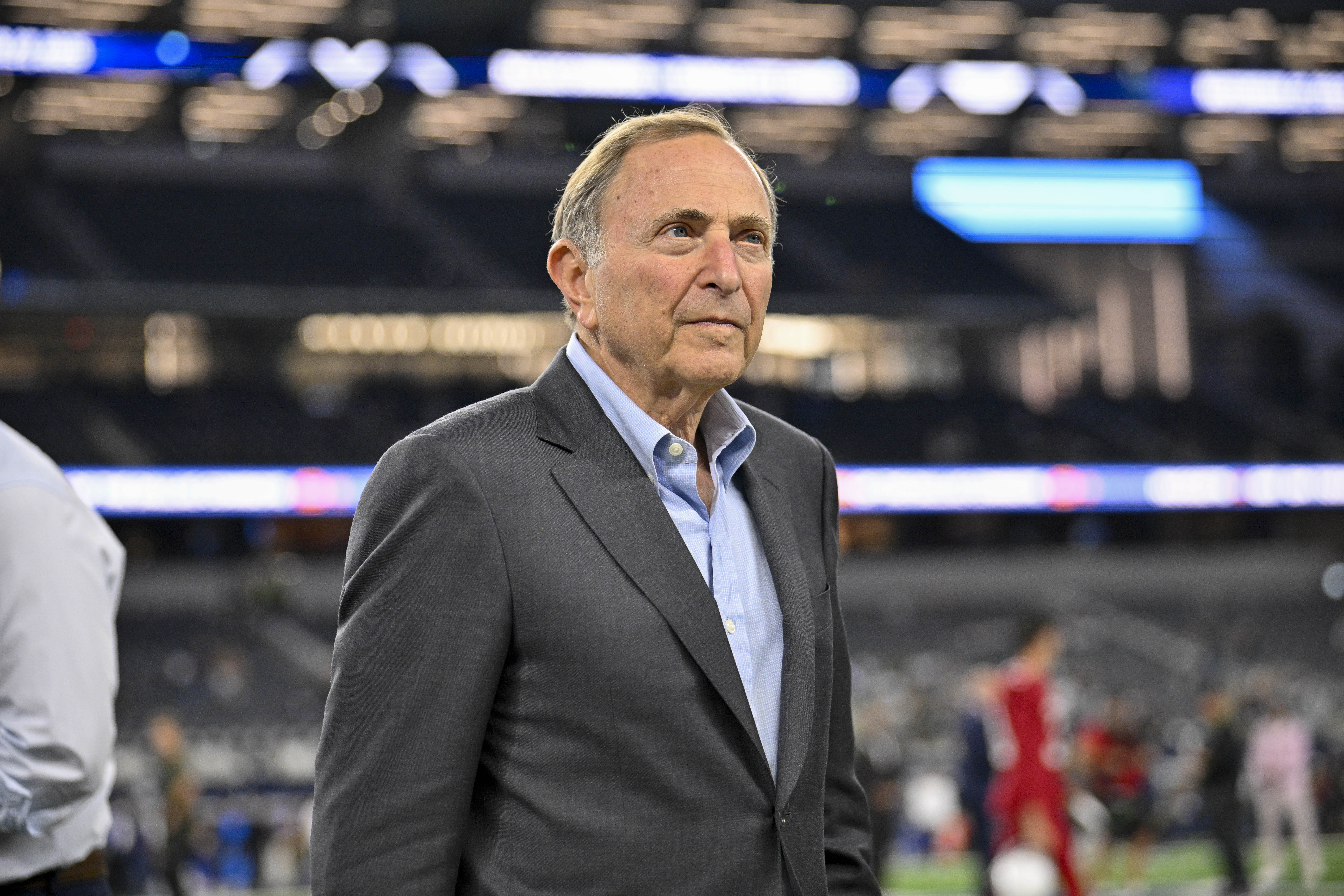
NEW YORK — If the NHL were a chessboard, Gary Bettman would be the grandmaster calmly moving pieces while everyone else argues about the clock.
Love him, boo him, meme him — the commissioner has spent more than three decades reshaping the league in ways that are measurable, visible and, yes, profitable. The numbers tell the story. When Bettman took office in 1993, the NHL had 24 teams. Today it has 32, with expansion into non-traditional markets such as Vegas Golden Knights and Seattle Kraken that have quickly become competitive and commercially successful.
Vegas reached the Stanley Cup Final in its inaugural 2017-18 season and won the Cup in 2022-23. That’s not just expansion — that’s instant relevance. Seattle, meanwhile, cracked the playoffs in its second season and won a first-round series in 2023. Expansion fees have soared into the hundreds of millions, franchise valuations have climbed dramatically, and the league’s footprint now stretches from the Nevada desert to the Pacific Northwest.
Hockey in the desert? Bettman shrugged and built it anyway.
On the ice, the league’s competitive balance has tightened. ESPN statistics consistently show compressed standings in both conferences, with wild-card races often decided in the final week. The salary cap era, implemented after the 2004-05 lockout, has produced parity that keeps fan bases engaged deep into March and April. Different champions have emerged across markets large and small, and the playoff field rarely feels predetermined.
And then there’s the small matter of the Stanley Cup’s mailing address.
No Canadian franchise has won the Cup since 1993, Bettman’s first year as commissioner. That drought — stretching more than three decades — has become a running storyline north of the border. Meanwhile, U.S.-based franchises from Tampa to Denver to Las Vegas have lifted the trophy. Coincidence? Probably. But if you’re a Sun Belt owner, you might call it strategic destiny.
Bettman’s growth model has emphasized national television exposure in the United States, culminating in the league’s current media rights agreements with ESPN and TNT. The result: expanded national windows, marquee matchups in prime time and a broader platform for stars. According to ESPN metrics in recent seasons, nationally televised games regularly draw some of the league’s highest U.S. audiences outside the Stanley Cup Playoffs.
And speaking of schedules — Bettman has turned the NHL calendar into a buffet.
The 2025-26 season returned from the Olympic break with mammoth slates of games packed into single nights, maximizing inventory and fan engagement. Wednesday night blocks often feature a dozen or more matchups across time zones, creating a whip-around viewing experience that mirrors the NFL’s RedZone energy — except with more slap shots and fewer commercial breaks.
It’s not accidental. Dense scheduling drives regional ratings, increases streaming engagement and keeps playoff positioning fluid. ESPN standings pages in late February routinely show razor-thin gaps between division leaders and wild-card hopefuls. That’s the kind of drama leagues dream about.
Then there’s Bettman’s flair for spectacle.
The Winter Classic has become one of the NHL’s signature events, blending nostalgia and innovation. Outdoor games at iconic venues — from football stadiums to historic ballparks — have delivered strong attendance and television numbers year after year. Bettman’s next move? If history is a guide, it won’t be subtle. Think unconventional geography. Think architectural landmark. Think a setting that makes you say, “They’re playing hockey there?”
Columnists can speculate about frozen lakes or scenic national parks, but Bettman tends to aim for venues that blend logistical feasibility with broadcast magic. The league has already proven it can stage outdoor games in warm-weather markets with the right refrigeration technology and planning. A bold new Winter Classic location feels less like a question and more like an inevitability.
Under Bettman, the NHL has grown revenues from roughly $400 million in the early 1990s to well over $5 billion annually in recent seasons, according to league figures frequently cited in business reporting. Franchise valuations have multiplied. Expansion markets have flourished. The playoff product remains one of the most intense in professional sports, with overtime formats that turn casual viewers into believers.
Critics will always exist. Commissioners are easy targets. But the ledger is hard to ignore.
Thirty-plus years in, Gary Bettman presides over a 32-team league with national TV deals, global participation, expanding U.S. markets and a Stanley Cup that hasn’t crossed the Canadian border since his arrival. He schedules like a man playing four-dimensional chess, markets like a Broadway producer and treats outdoor hockey like an annual holiday tradition.
Call it vision. Call it stubbornness. Call it genius.
Whatever the label, the league he oversees is bigger, louder and more geographically adventurous than the one he inherited. And if the next Winter Classic ends up somewhere audacious — perched against a skyline or tucked into a postcard-worthy backdrop — don’t act surprised.
The grandmaster rarely moves a piece without seeing three plays ahead.
Check out all EasySportz NHL Content Here
College Football Viewing Guide