The New York Mets didn’t make this trade to play it safe. They made it to chase upside.
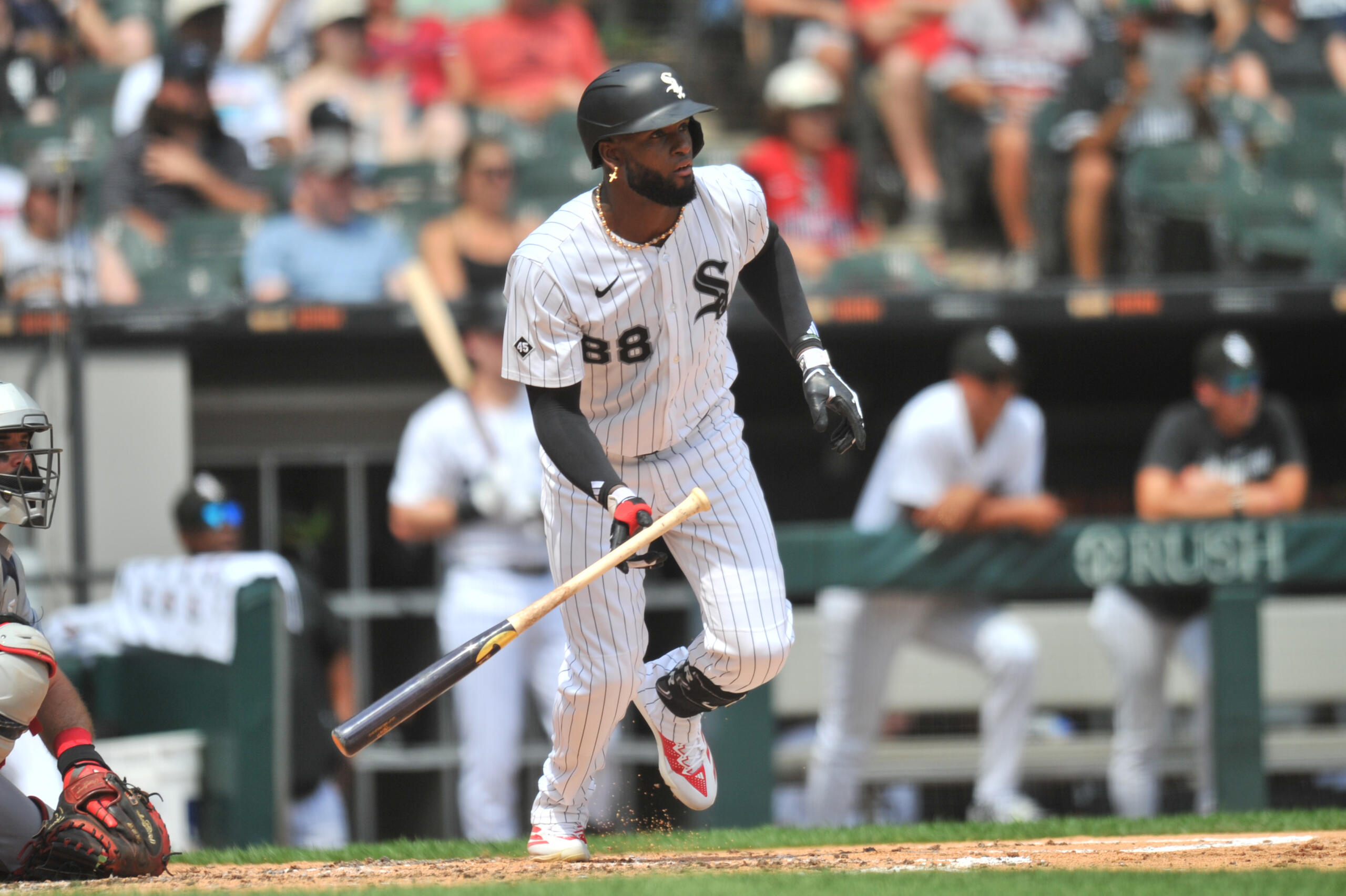
Late Tuesday night, the Mets acquired center fielder Luis Robert Jr. from the Chicago White Sox, sending infielder Luisangel Acuña and right-hander Truman Pauley the other way. The Mets will assume Robert’s full financial commitment: $20 million in 2026 and either a $20 million club option or a $2 million buyout for 2027. Jeff Passan first reported the full trade details, with Ken Rosenthal confirming shortly after.
On paper, it’s a straightforward deal. In reality, it’s a calculated gamble on one of the most talented — and volatile — players in baseball.
The Player the Mets Are Betting On
Luis Robert Jr. is still just 28 years old, and when he’s right, he looks like a franchise player. He plays a premium position in center field, runs well, hits the ball as hard as almost anyone in the sport, and can take over a game in a matter of minutes.
The upside isn’t theoretical. We’ve already seen it. At his best, Robert has looked like an MVP-level talent: 30-plus home run power, double-digit steals, elite defense, and rare athleticism for a player with his strength. There simply aren’t many center fielders who can impact the game in as many ways as he can.
What has held him back has never been talent. It’s been health and consistency. Injuries have cut into multiple seasons, and his offensive production has come in waves rather than steady dominance. The Mets are betting that those issues are manageable — and that a new environment can help unlock something closer to his peak on a more regular basis.
Why This Makes Sense for the Mets
From the Mets’ perspective, this is a classic upside-for-depth trade. They moved two controllable pieces who project as useful major leaguers for a player who, if things break right, can be a star immediately.
Acuña brings speed, versatility, and promise, but his bat is still a question at the highest level. Pauley is a solid pitching prospect, yet still more projection than certainty. Neither is a sure thing.
Robert is. Not in terms of health, but in terms of impact. He immediately upgrades the Mets in center field defense, adds right-handed power to the lineup, and injects athleticism into a roster that has leaned more toward patience and power than speed. Those are traits that matter in tight division races and playoff games.
The contract structure makes the risk palatable. Only one year is guaranteed. If Robert performs and stays on the field, a $20 million option for 2027 is a bargain in today’s market for a premium center fielder. If it doesn’t work, the Mets can move on with minimal long-term damage.
The Bigger Picture
This move fits where the Mets are right now. They aren’t rebuilding, and they aren’t handing out decade-long commitments. They’re targeting impact, flexibility, and ceiling.
Robert doesn’t have to be perfect for this trade to work. He just has to be close to the player he’s already shown he can be. If that happens, the Mets didn’t just add a center fielder.
They added a potential game-changer — and sometimes, that’s a risk worth taking.