Dante Moore has been on the NFL radar for years. What matters now is how his game is catching up to the expectations.
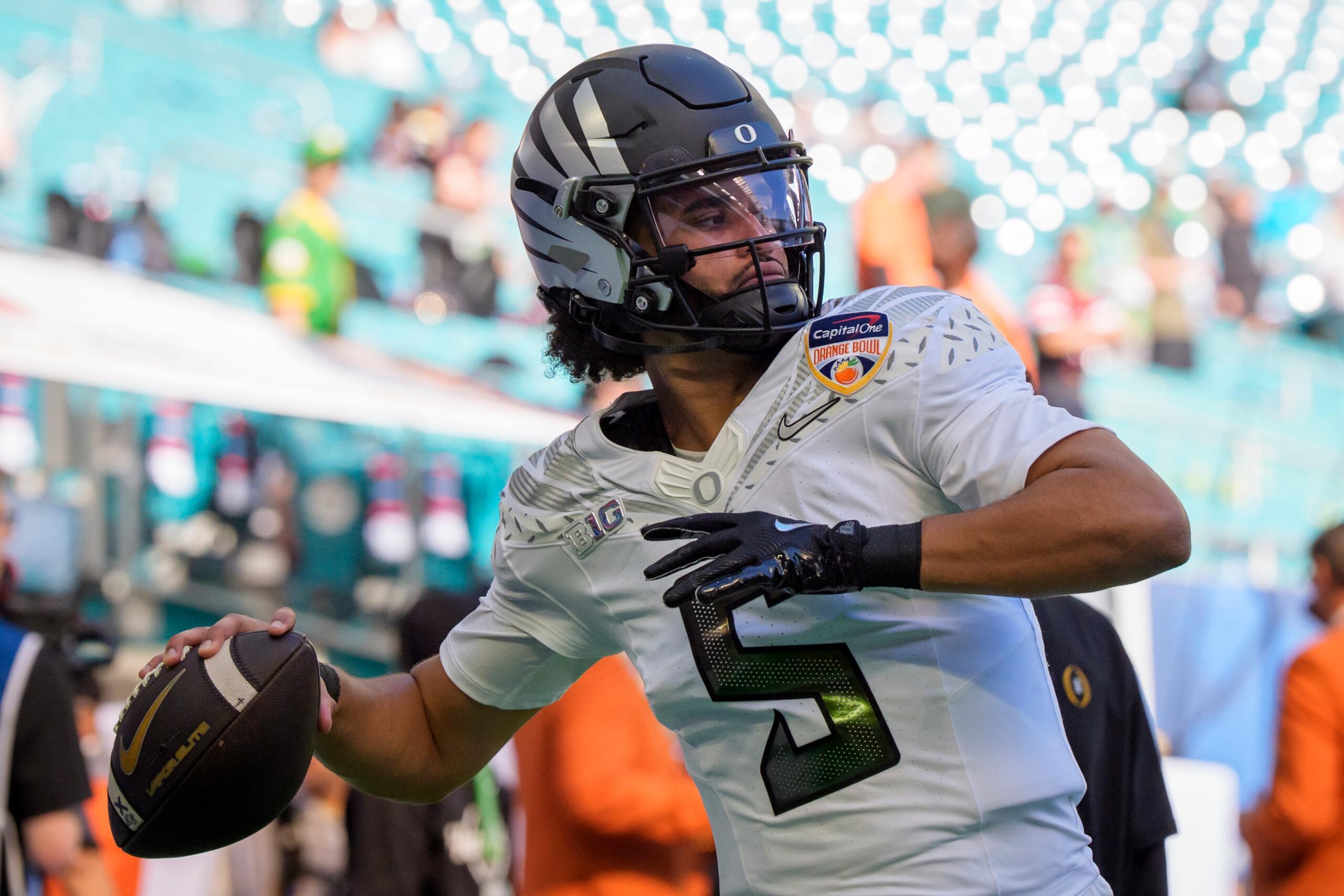
The Oregon quarterback is still one of the youngest passers in college football, yet he is already showing the kind of growth evaluators want to see before projecting a player to the next level. Through Oregon’s ongoing season, Moore has thrown for 2,730 yards with 24 touchdowns and nine interceptions, completing just over 64 percent of his passes. Those numbers reflect both his upside and the natural volatility that comes with a young quarterback still refining his game, with more opportunities ahead to continue that progression.
Physically, Moore checks boxes teams look for early in the evaluation process. He has a strong, compact build with a quick, live arm that jumps off the tape. The ball comes out easily, and he can generate velocity from multiple platforms. When his feet are set, Moore can drive throws to the far hash and push the ball vertically without strain. Arm talent has never been the question.
What has stood out this season is how Moore is learning to manage an offense rather than simply showcase ability. Oregon’s system asks him to make full-field reads, operate with tempo and take what defenses allow. Moore has shown improved patience in those areas, working through progressions and resisting the urge to hunt big plays on every snap. When he stays within structure, the offense flows.
Moore is at his best attacking intermediate windows. He throws a catchable ball with good trajectory and touch, especially on in-breaking routes and seam concepts. His confidence shows when he anticipates breaks rather than waiting for receivers to clear. That timing element is still developing, but the flashes are frequent enough to project improvement rather than inconsistency.
Pocket presence remains a work in progress, which is expected given his age and experience. Moore can drift at times and will occasionally leave clean pockets too early. When pressure is immediate, his mechanics can get rushed, leading to misses high or wide. Those moments show up in the interception total and are part of the learning curve rather than a permanent flaw.
Athletically, Moore is functional rather than dynamic. He is not a run-first quarterback, but he has enough mobility to escape pressure, reset and extend plays. He keeps his eyes downfield while moving and has shown the ability to throw accurately on the move when plays break down. That skill becomes increasingly important at the NFL level.
Decision-making is the next step in Moore’s evolution. He is learning when to challenge coverage and when to live for the next snap. Oregon’s staff has leaned into that development, and the improvement shows in how Moore handles situational football. He has become more comfortable throwing the ball away, checking it down and managing field position rather than forcing throws into tight coverage.
Some evaluators will focus on the turnovers and point to stretches of uneven play. That criticism comes with context. Moore is playing meaningful snaps at a young age against complex defenses, and the mistakes are paired with visible growth. The arm talent, confidence and competitive makeup remain intact, which is why teams continue to view him through a long-term lens.
What works in Moore’s favor is how coachable his issues appear. Footwork, pocket discipline and consistency are all areas that typically improve with reps and structure. Those traits are easier to develop than arm strength or natural feel for throwing the football, both of which Moore already possesses.
In a draft cycle that will feature quarterbacks with safer statistical profiles, Moore represents upside rooted in real traits rather than projection alone. He is not a finished product, but the foundation is strong. Teams willing to be patient will see a quarterback with starting-level tools and room to grow.
This is the type of prospect who rewards long-term thinking. Moore’s best football is still ahead of him, and for organizations that value development, that should be part of the appeal rather than a concern.