DAYTONA BEACH, Fla. — Somewhere between the third cup of coffee and the first accidental nap on the couch, the true diehards revealed themselves.
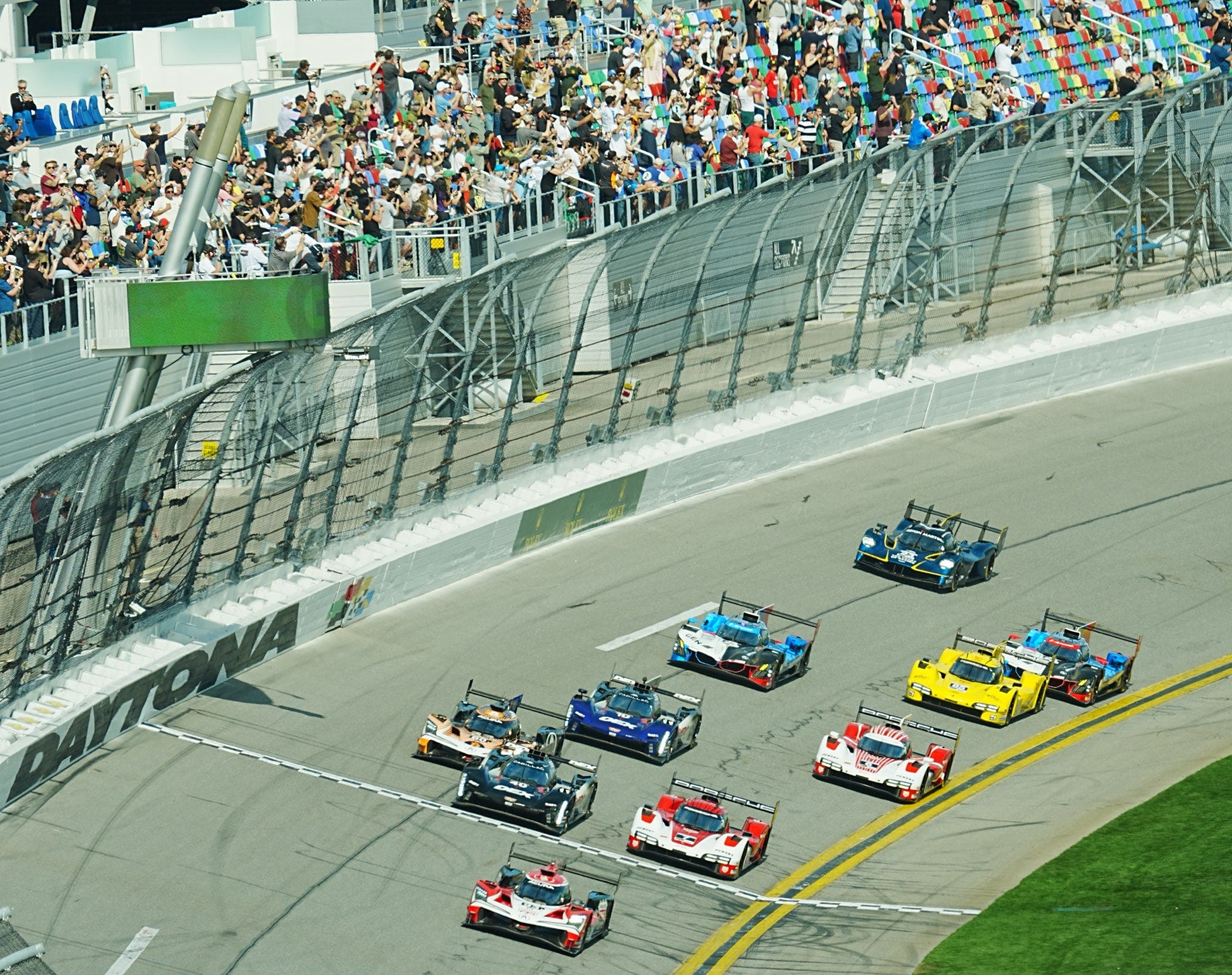
Through the wee hours of Sunday morning, the Rolex 24 at Daytona remained under extended full-course yellow as dense fog and poor visibility blanketed the speedway. The caution period stretched beyond four hours, turning what many hoped would be classic green-flag night racing into a slow-burn test of patience, discipline and endurance — for teams and fans alike.
Those who stayed up waiting for the track to come back to life did so with the optimism of a kid trying to spot Santa Claus, eyes glued to timing screens and onboard cameras, hoping for movement. Instead, the clock kept ticking while the field circulated at reduced speed, preserving equipment and waiting for daylight to do its work.
Connor Zilisch climbed into the car early Sunday morning and, despite the conditions, kept pace under yellow. With no opportunity to push, the objective was simple: keep the car clean, hit fuel and tire marks, and stay mistake-free. It may not show up on highlight reels, but the stint still counts. Laps were logged. Time elapsed. Position mattered.
From a strategic standpoint, the prolonged caution compressed the field and kept contenders within striking distance. Full-course yellows at Daytona historically tighten margins, limit green-flag pit strategy and increase the importance of restarts once racing resumes. With visibility the primary concern overnight, teams prioritized survival over aggression — a smart move in a 24-hour race where one misstep can erase 18 hours of work.
The downside is obvious. Zilisch’s entire night stint unfolded under caution, reducing opportunities to capitalize on pace and traffic management. The upside? With the race slowed but not stopped, the window for late-race drama widened. No lead is safe when the field is bunched and the sun is rising.
Officials had not announced a definitive return-to-green time early Sunday, but improving conditions were expected as daylight arrived. Historically, morning sun at Daytona helps burn off fog, and if visibility improves as anticipated, fans could be rewarded with an action-packed final stretch.
For now, credit goes to those still awake — or pretending to be — who stuck it out, coffee in hand, believing green flags were just one corner away. The race is still alive, the outcome still undecided, and if the fog lifts, the morning may deliver exactly what the night promised.
Maybe after one more cup.
Hang in there, fellow motorsports diehards. We’re going to see green flag laps again eventually.
If you made it to nearly 6 am, going on hour 4 of the full course yellow, you are officially a diehard lover of wheel in our book!
Check out all EasySportz NHL Content Here
College Football Viewing Guide