Baltimore entered the season chasing a Super Bowl and ended it confronting hard truths.
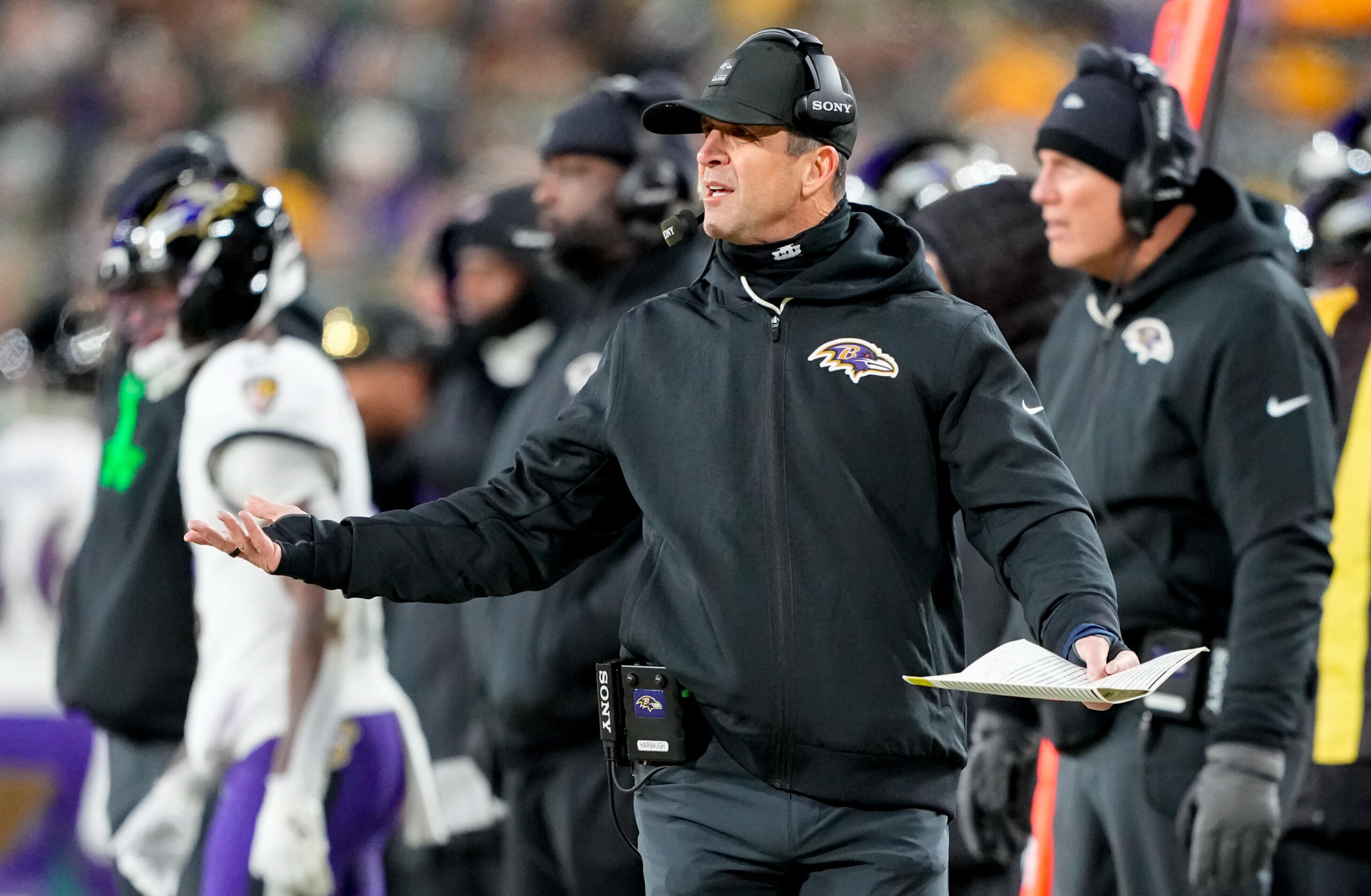
The Baltimore Ravens spent nearly two decades believing in one man to guide them through every phase of success and struggle. That belief ended with the firing of head coach John Harbaugh, a move that felt jarring only because it took so long to arrive.
This was not a reaction. It was a conclusion.
The Ravens opened the season at or near the top of Super Bowl favorite lists. Expectations were not subtle. This was supposed to be a championship run, the payoff year for a roster built to win now. Instead, Baltimore missed the playoffs entirely. When a team begins the year as a title favorite and ends it on the outside looking in, accountability follows.
Baltimore did not fail quietly. It failed publicly and repeatedly.
The Ravens missed the postseason despite talent across the roster. That alone put pressure on the organization. But the deeper issue was how the team played when expectations were highest. Too often, Harbaugh’s teams looked disorganized, uneven, and unprepared in moments that demanded precision.
At times, they looked poorly coached.
Games swung on avoidable mistakes. Situational football broke down. Late-game execution faltered. Clock management and in-game adjustments became recurring problems. These were not one-off lapses. They were patterns that showed up across seasons and reappeared when the stakes were highest.
That is where coaching shows itself most clearly.
Harbaugh’s résumé bought him patience. A Super Bowl title bought him credibility. Years of winning seasons bought him trust. What they could not buy anymore was immunity from scrutiny. When highly touted teams consistently fall short of expectations, responsibility shifts from talent to leadership.
This season followed a familiar script. Promising stretches gave way to confusion. Momentum vanished. The offense stalled at critical points. The defense held on until it couldn’t. The Ravens played meaningful football, but not consistently sound football, when it mattered most.
That gap is where coaching accountability lives.
Baltimore’s leadership prides itself on honesty. Keeping Harbaugh would have meant accepting that these shortcomings were part of the program rather than symptoms of it. The evidence suggested the message had lost its edge and the standard had softened.
The Ravens were not rebuilding. They were drifting.
Letting go of Harbaugh does not erase what he accomplished. He helped shape the franchise’s identity and delivered its highest moments. But past success cannot excuse present failures, especially when preparation and execution no longer match championship expectations.
The NFL does not reward loyalty for its own sake. It rewards urgency and results. Baltimore waited as long as it reasonably could, hoping stability would turn promise into performance. Instead, stability became a ceiling.
This move sends a clear message. The Ravens expect more than preseason hype and near misses. They expect results.
Change carries risk. Staying the same had already delivered the answer.
For a franchise built on standards, this decision was overdue. The Ravens finally confronted what had become impossible to ignore, even when it meant moving on from the coach who once defined them.