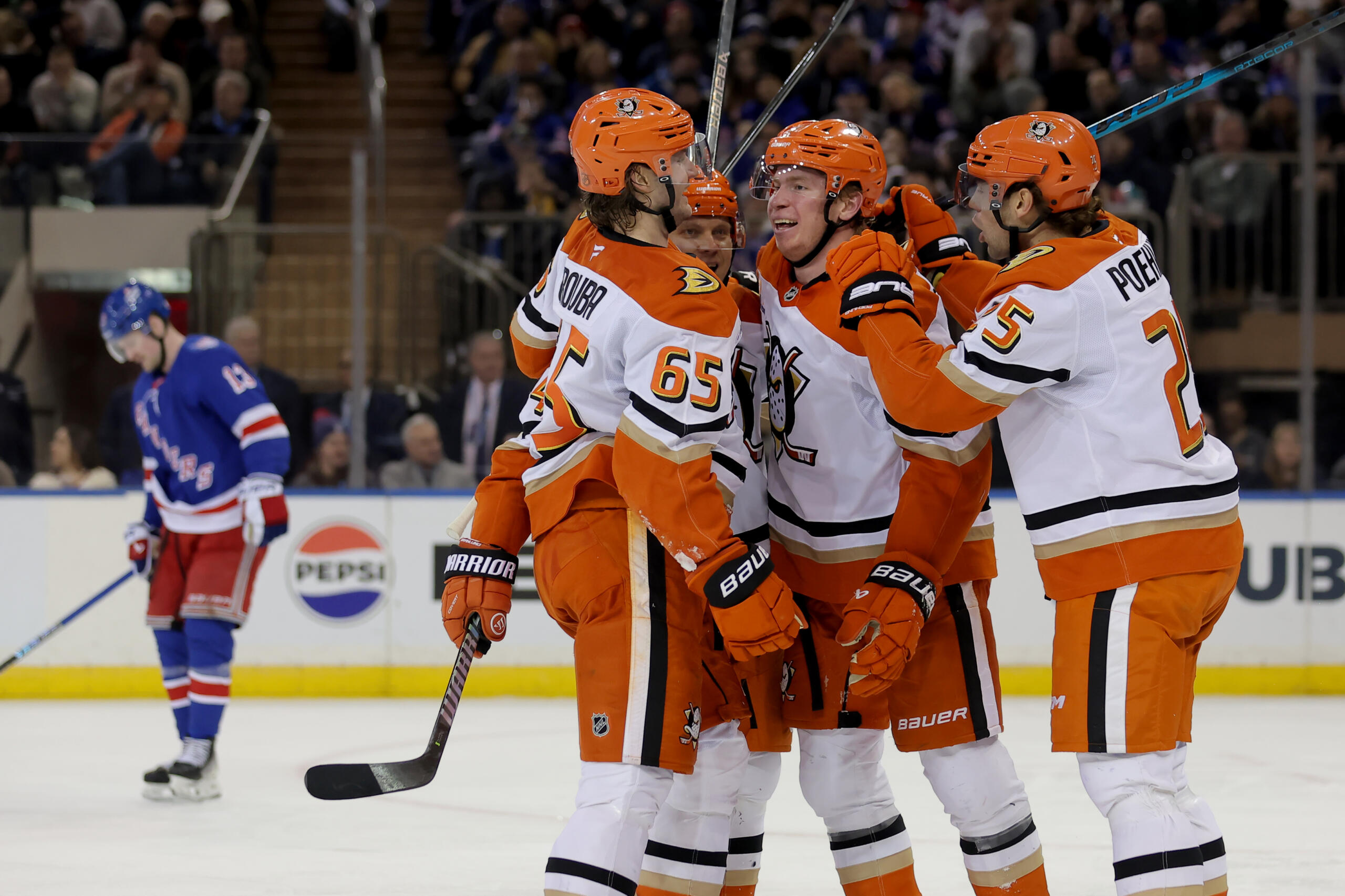
ANAHEIM, Calif. — Once the punchline of Western Conference previews and the butt of every “When will the Ducks ever …?” joke, the Anaheim Ducks have quietly become the story in the early 2025-26 NHL season. There’s a real buzz at Honda Center — not just because of the revived branding or nostalgia-tinged jerseys, but because this team is winning hockey games again, and doing it in a way that suggests the future is truly bright.
Anaheim enters the week with a 19-12-1 record and sitting second in the Pacific Division, a position that would have raised eyebrows just a year ago. The Ducks are back in the upper echelon of the West, leading to real talk about playoff hockey in Orange County for the first time since 2018.
What’s fueling this surge isn’t a fluke or a hot streak — it’s a fun, frisky roster built around youth, balance and savvy veteran depth, all underpinned by a reinvigorated identity and a sack-the-status-quo mentality from management. And yes, the brand evolution — which brought back a refreshed version of the classic Ducks logo with bold orange at the forefront — has become more than just a marketing triumph. It’s become a symbol of confidence reborn.
A New Look, A New Energy
This season’s aesthetic — a vibrant orange jersey and an updated duck-mask icon — isn’t just a nod to the franchise’s roots. It’s a visible declaration that the Ducks are ready to fly again. Fans have embraced the change, and that energy has translated on the ice: Anaheim is fun to watch, and success breeds excitement.
Balanced Scoring & Young Stars Rising
Leading the charge this season is Leo Carlsson, the 20-year-old Swedish center who has made the leap from promising youngster to impact performer. Through just 32 games, Carlsson has 40 points (17 goals, 23 assists) — placing him among the team’s scoring leaders and tied for the top echelons of NHL point production. His seven-game point streak and knack for contributing at both ends of the ice have made him a constant threat.
While Carlsson’s star ascends, the Ducks boast a host of complementary contributors: Cutter Gauthier and Mason McTavish bring physicality and scoring juice, Troy Terry chips in with secondary offense, and veteran additions like Chris Kreider provide seasoning and balance. This kind of depth has made Anaheim competitive in all zones, not just on the power play or in isolated scoring bursts.
Retooling Smart: Why Anaheim Is Better Off Now
The offseason trade of Trevor Zegras to the Philadelphia Flyers — in exchange for Ryan Poehling and multiple draft picks — raised eyebrows at the time. Zegras was once a highlight-reel machine and a fan favorite in Anaheim, known for his creativity and flair on the ice. That said, his production dipped over the past couple of seasons (47 points in 88 games before the trade), and the Ducks made a calculated decision to reshape their roster around balance rather than singular heroics.
In hindsight, the move has paid dividends. Anaheim’s current roster doesn’t depend on one player’s brilliance to win games. Instead, it thrives on system play, depth scoring and real-time adaptability. Guys like Carlsson and McTavish — both younger and more consistent contributors — have flourished. Meanwhile, Zegras, while still talented, likely would have continued to command significant minutes and usage, potentially limiting the development of other emerging Ducks.
Goaltending & Defense: The Glue That Binds
Another key to Anaheim’s surge has been consistent goaltending and a more committed defensive system. The Ducks moved on from longtime starter John Gibson and instead committed to Lukas Dostal, locking him up with a five-year extension this summer. Dostal’s play has provided stability in net, and his energy has reverberated through the locker room.
Up front and on the blue line, Anaheim’s structure has tightened up, leading to better scoring chances against while still generating offense. Though the power play and penalty kill have room to improve compared to elite NHL clubs, the team’s five-on-five play has kept them competitive in tight games.
Where They Stand — And Where They’re Going
The Ducks’ statistical résumé this season — 19-12-1 through mid-December — reflects a club that doesn’t simply scrape by. Anaheim is competitive against good teams, resilient on back-to-back nights and capable of stealing points even when the bounces don’t go their way.
What’s more, this isn’t a one-line story. The Ducks are scoring from multiple lines and finding balanced production. They’re fun to watch again — not in a gimmicky sense, but in the way hockey should be: competitive, unpredictable and collectively executed.
Still Hungry, Still Growing
There’s a long way to go in the 2025-26 season, and playoff hockey in the Pacific won’t be handed to anyone. But Anaheim has shown that its rebuild isn’t a mere philosophical statement — it’s a practical, effective plan yielding real results.
Fans in Orange County and beyond are seeing something they haven’t in years: a Ducks team that plays with confidence, skates with swagger and wins at a rate worthy of attention out west. If this season continues on its current trajectory, the Ducks won’t just be a story — they’ll be a contender.
And for a franchise that once thrilled the hockey world as the “Mighty Ducks,” that’s the kind of revival story any fan can rally behind.
Anaheim is back. The jerseys have changed, the style has evolved, the youth has arrived — and the wins are stacking up in a way that suggests the future here isn’t just bright. It’s orange.
Check out all EasySportz NHL Content Here
College Football Viewing Guide