The Tigers keep collapsing in winnable games, and their head coach seems more interested in blaming referees than fixing his own mistakes.
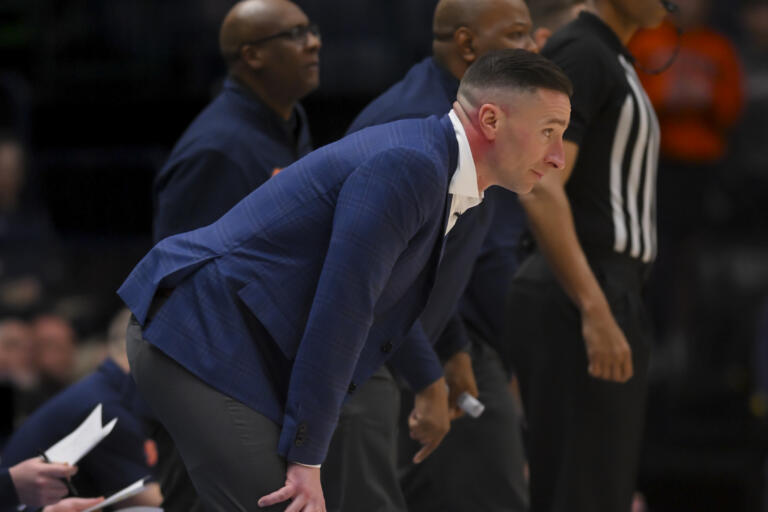
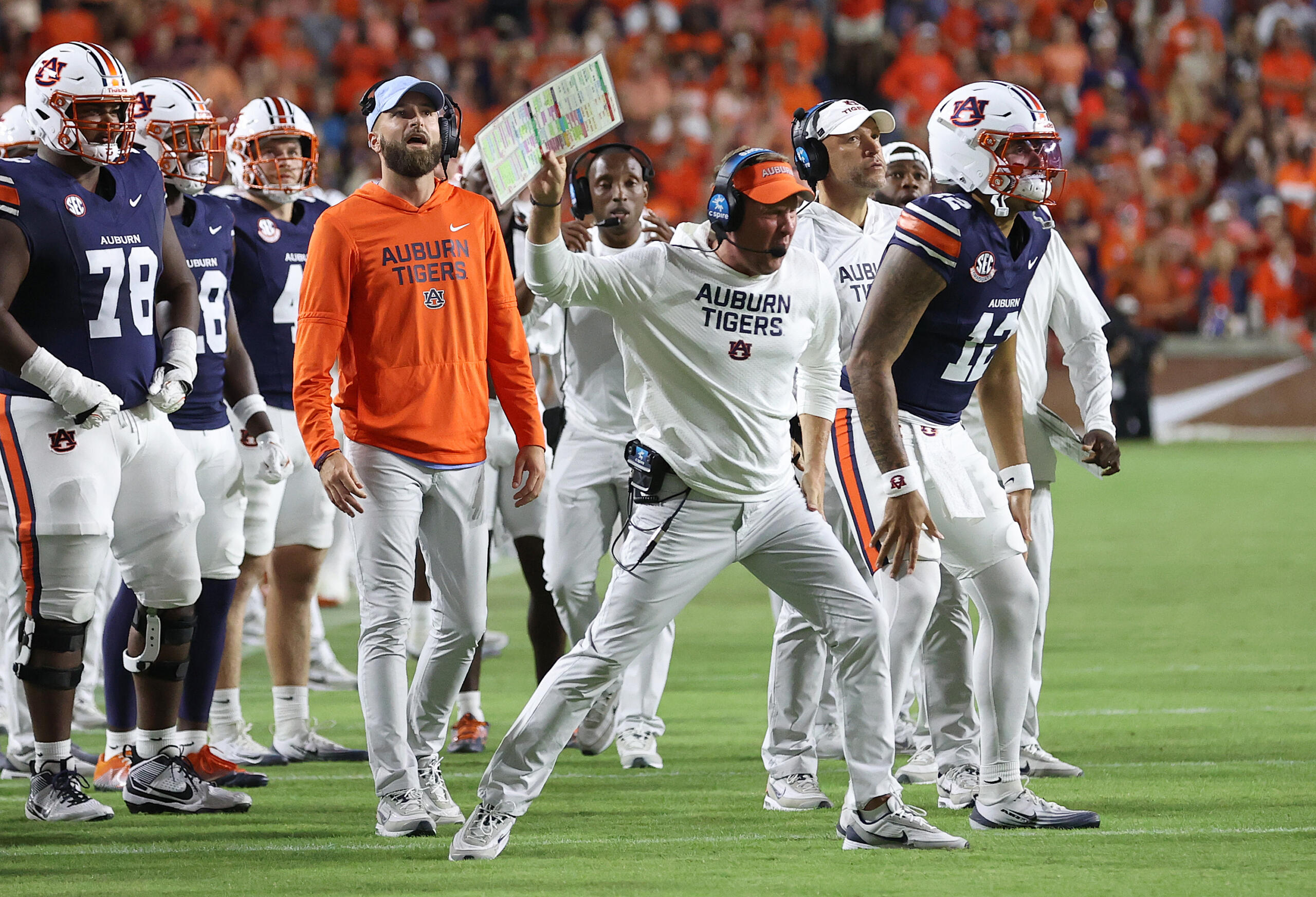
The scoreboard doesn’t lie, and neither do the trends. Hugh Freeze’s Auburn team keeps finding new ways to lose winnable games — and the head coach seems more interested in complaining about the referees than fixing the problems that keep putting his Tigers in those positions.
After Auburn’s 20–10 loss to Georgia, Freeze was quick to focus on officiating. He pointed to a controversial fumble call near the goal line that wiped out a potential Auburn touchdown, suggesting his team “can’t seem to catch a break” with SEC officials.
But bad calls don’t explain Auburn’s collapse in the second half. Georgia outgained Auburn 277 yards to 39 after halftime and converted six of seven third downs. Auburn? 0-for-6. The Bulldogs adjusted. Freeze didn’t.
That’s not an officiating issue. That’s a coaching problem.
A pattern, not a fluke
This is becoming Auburn’s identity under Freeze — good starts, bad finishes, and little accountability. Against Vanderbilt last year, the Tigers led late before going conservative, abandoning the run and leaving Jarquez Hunter with just two carries in the second half. Freeze later admitted it was “a bad decision.”
Clock management has also been a recurring issue. In that same Vanderbilt game, Freeze called a timeout at 2:01 before the two-minute warning — a move that stopped the clock and helped the Commodores mount their comeback. Afterward, Freeze owned the mistake, saying, “That’s on me.”
Each time, the story ends the same: Freeze finds someone else to blame. The refs. The breaks. The execution. Rarely himself.
Micromanagement and confusion
Inside the program, Freeze’s control issues are no secret. Multiple reports say he often overrides assistant coaches’ play calls, creating a culture of hesitation and confusion. When coordinators don’t know if their calls will stick, they coach scared — and that bleeds into the players’ mindset.
A good head coach sets structure and lets his assistants operate. Freeze, by contrast, tightens his grip when things get tense. That’s why Auburn looks disorganized in crunch time — no one knows who’s truly in charge.
The officiating smokescreen
Complaining about referees is easy. Coaching through adversity isn’t. Freeze’s repeated focus on officiating comes off as an attempt to control the story rather than confront his own shortcomings. “We just aren’t getting any breaks,” he said after the Georgia game.
But breaks aren’t what’s missing. Execution is. Auburn’s defense has shown fight, but its offense — Freeze’s supposed specialty — ranks near the bottom of the SEC in total yardage and second-half scoring. That’s not bad luck. That’s a failure to adjust.
As defensive lineman Keldric Faulk told reporters after the Georgia loss, “Yeah, that call hurt us, but we didn’t do enough after that. We let it go.” The players know the truth. It’s their coach who won’t say it out loud.
No one left to blame
Freeze was hired to bring discipline, creativity and accountability to Auburn football. Instead, his program looks undisciplined, uncreative and quick to pass the buck. The Tigers have now dropped three conference games, each marked by the same script: early energy, missed opportunities, second-half unraveling, and postgame excuses.
Auburn fans have seen this movie before. They call it being “Auburned” — watching potential dissolve into heartbreak. But this version feels self-inflicted. The biggest problem isn’t officiating. It’s leadership.
Until Hugh Freeze stops obsessing over the calls and starts coaching his team to finish games, Auburn will keep losing for the same reason: the man in charge keeps getting in his own way.
Check Out All EasySportz College Football Content Here!
College Football Viewing Guide, Week 8